


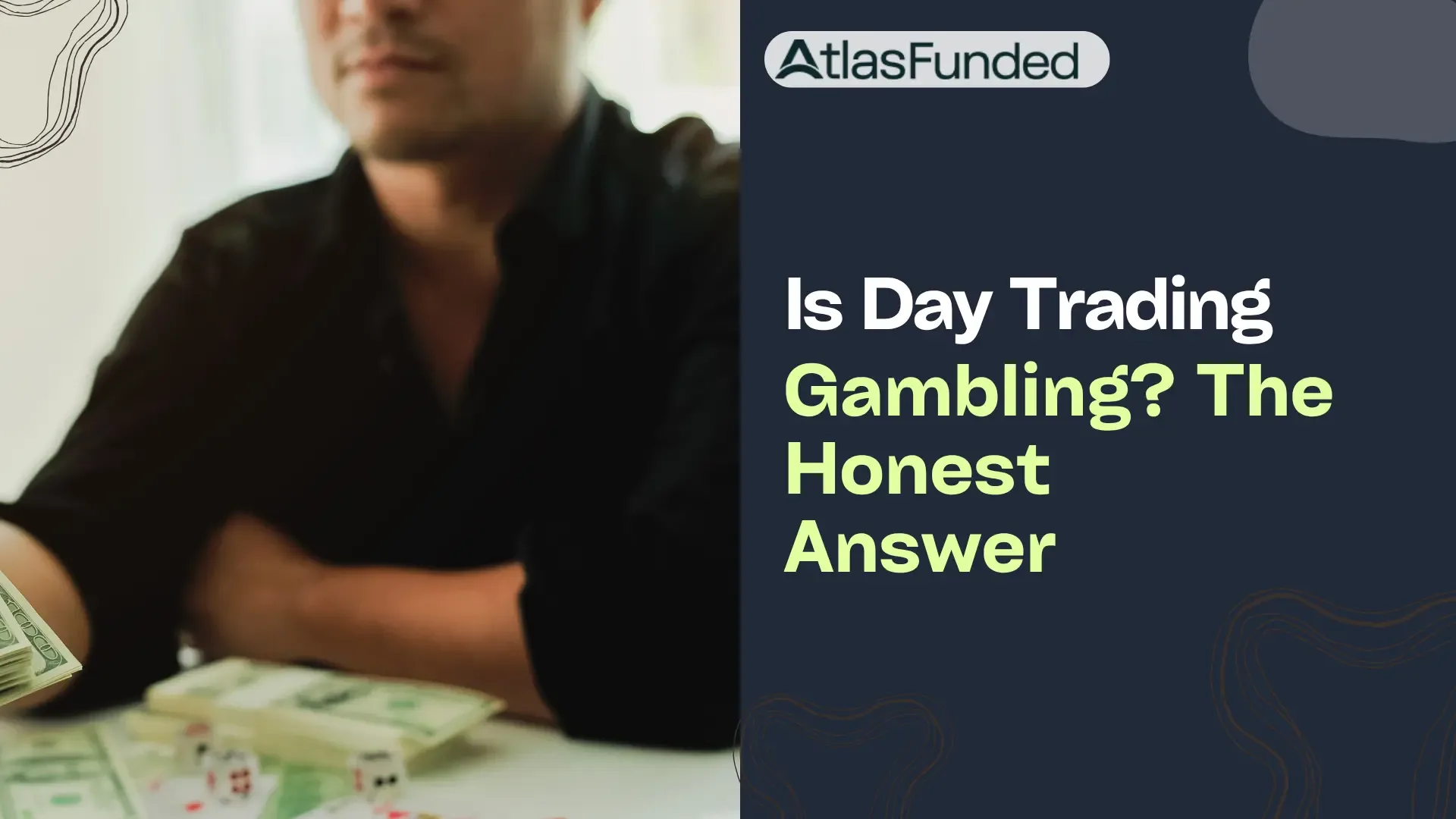
Many people see day trading as just another form of gambling. They often draw parallels between sports betting or poker and the high-risk financial speculation that day traders engage in. If that’s the case, day trading may be viewed as ethically or morally questionable, particularly from Christian and Muslim perspectives.
This post answers the question "Is day trading gambling?" in full detail. Here are some key points from the article:
- Day trading is NOT the same as gambling.
- The majority of day traders and gamblers lose money.
- Both activities involve high risk, fast pace, and prediction of outcomes.
- However, day trading is strategic and takes place in a free market, unlike gambling.
- Day trading can, however, become gambling when there is a lack of proper risk management or emotional control.
Let’s take a more in-depth look into how day trading differs from gambling and why people mistake one for the other.
Understanding Gambling and Day Trading
Before we can explore their similarities and differences, we have to start by defining the two activities.
Meaning of Gambling

According to Merriam-Webster, gambling is defined as the practice of risking money or other stakes in a game or bet. The same dictionary defines a “bet” as a choice made by consideration of probabilities.
We can safely say that gambling sometimes involves risking money on a choice made by consideration of probabilities.
Lotteries, sports betting, horse betting, casino table games, cards, and bingo are all forms of gambling.
Meaning of Day Trading
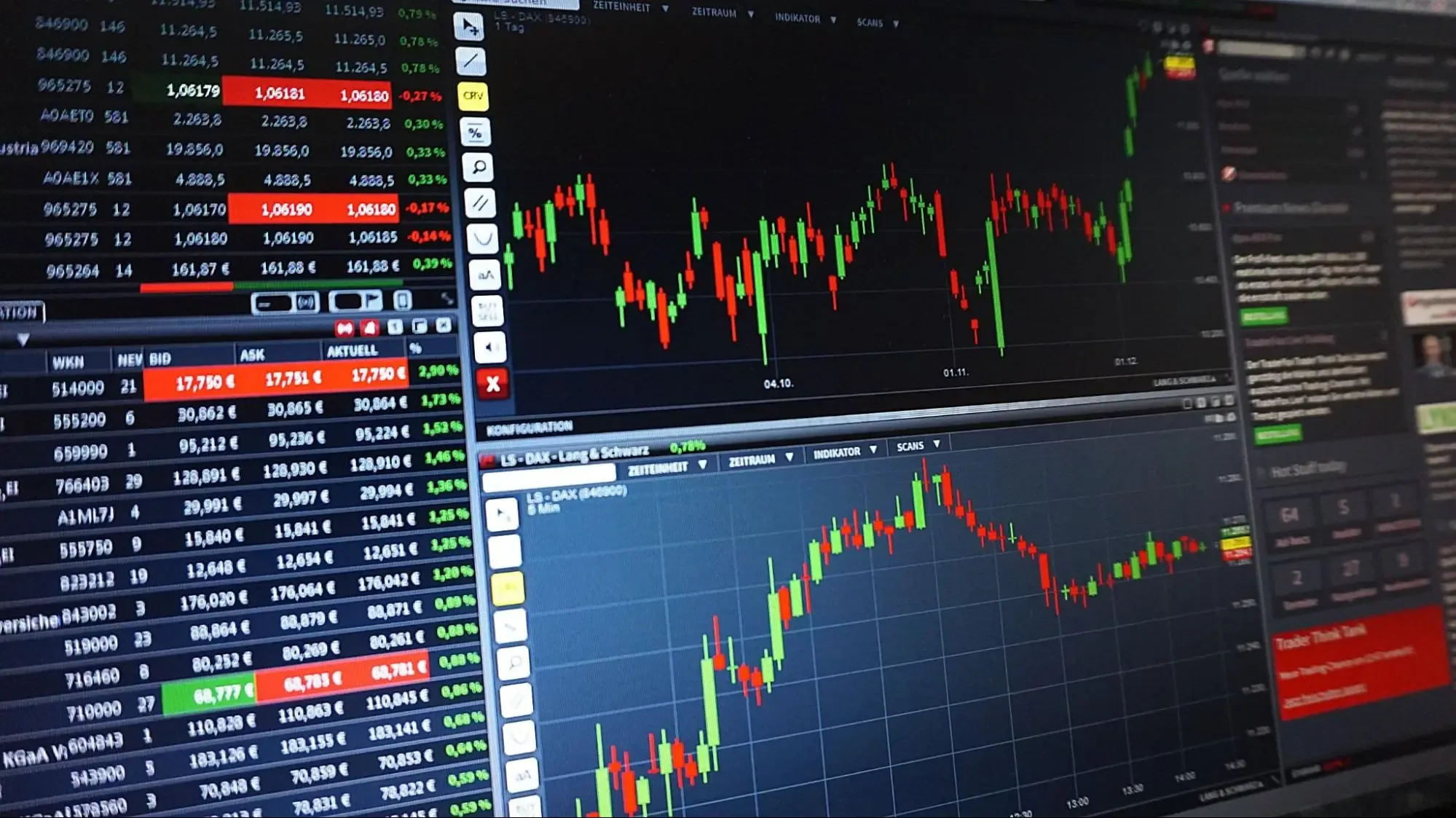
Investopedia, the world’s leading financial education website, defines day trading as a fast-paced form of investing in which individuals buy and sell securities within the same day.
The key term there is “investing,” which, according to Merriam-Webster, is an act of committing money in order to earn a financial return. Assets like stocks, crypto, shares, forex, and commodities all qualify as possible securities that can bring financial returns.
When you make any kind of commitment, there is always a degree of risk involved. The same goes for when you commit money to an investment. There’s a chance that you lose that money.
Day Trading Vs. Gambling
Let’s examine traits both activities share and characteristics that set them apart.
Similarities
High Financial Risk
Both gambling and day trading involve high financial risk. As mentioned earlier, people who engage in day trading will likely lose money. Only a small group becomes profitable. Recent studies indicate that 64% of day traders lose money.
The risk is just as high when it comes to gambling. Research also shows that 85% of gamblers lose money.
Predicting Outcomes
Another trait shared by both activities is the use of probability to predict outcomes. Gamblers often rely on odds when placing bets. In some games, such as poker, a gambler would rely on their own skill. Sports bettors also carry out statistical analysis when predicting outcomes. However, there is still a lot left to chance. No one can truly know the future outcome of a bet, even when skill is involved.
The case is identical when it comes to day trading. There is no guaranteed outcome. Day traders often use a combination of technical analysis, market trends, news reports, and experience to speculate on price movements.
Short Term
The outcomes of day trading are usually resolved within a day, sometimes as quickly as minutes or even seconds. Gambling is similar, with most outcomes getting resolved in minutes.
They both operate in fast-paced environments and feature multiple trades or bets in a day. A major reason day trading is often associated with gambling is its high trading frequency, which significantly increases the risk of financial loss.
Differences
Strategy
While both activities require you to make decisions based on probability, day traders try to maximize their chances of success and minimize risk by creating a structured plan. This plan includes trading strategies, loss limits, profit targets, and risk tolerance.
With most types of gambling, such plans don’t exist. Gamblers often rely on hope, intuition, or luck when staking their money. Unlike day trading, where beginners spend months or years learning strategy, gambling often requires little preparation beyond understanding the rules.
Environment
The environments that determine the outcomes of day trading and gambling are vastly different. With day trading, the market decides whether or not your positions lead to profit. The fact that it’s constantly evolving means that traders have to continuously analyze those changes before making decisions.
Gambling, on the other hand, is dependent on a game with strict rules. The players may change, but the rules of the game remain relatively stable. A gambler’s main focus is improving their skills within the confines of those rules.
Authority
Gambling typically occurs under the authority of a central body, known as the “house.” They set the odds, potential returns, and other important factors. However, day trading features no overseeing authority.
Brokerages and prop trading firms have rules and regulations that traders must follow. However, you get to trade in a free market. They don’t have any power over market trends, share prices, or other vital trading factors.
Why Day Trading Is Short-Term Investing, Not Gambling
Day trading, when carried out properly, is not gambling. Here are the reasons why:
Day Trading is Strategic, Not Hope-Based
To turn a profit in day trading, you must take an analytic approach by relying on strategy over hope or luck. No professional trader takes a position without a proper entry and exit strategy or stop-loss order. Some go as far as analyzing market trends, price charts, volumes, and more before making any decision. Like any investment, day trading involves taking calculated risks.
Day Trading Thrives On Discipline
Day trading the right way requires you to control your emotions and stick to your plan. That’s why risk management is so important. The best prop firms understand the need for discipline, which is why they only fund day traders who pass a challenge while following risk management rules.
Day Trading Operates in a Free Market
There is no house edge when it comes to day trading. Unlike gambling, where the casino (“house”) holds the mathematical advantage, day trading throws you in an open market consisting of other participants. Only the skilled are likely to succeed long-term—not the luckiest.
When Can Day Trading Become Gambling?
Let’s help you find out when we can consider trading to be borderline gambling.
Breaking Your Own Rules
You’re gambling the minute you start to trade outside of your established strategy. In breakout trading, for example, if you’ve set a resistance level at $30, you shouldn’t buy at $25. Always remember that you set those rules for a reason. Trust the process.
Chasing Losses
The term “chasing a loss” is a dangerous, emotion-driven behavior where a gambler or trader increases bets, stakes, or risks to recover previous losses, rather than quitting. A day trader must always be ready to quit, even when behind.
Trading with Emotions
Fear, greed, anger, regret, and even hope are common emotions among gamblers. If you let them influence your trading decisions, then you’re essentially gambling. For example, many traders lose money by refusing to exit positions even after reaching their profit targets. Learn to control your emotions by practicing risk management and taking frequent breaks.
Relying On Guesswork
Blindly making trades based on guesswork or “gut feeling” is a clear sign that you’re gambling. Day trading should be driven by news events, trends, and historical data.
Getting Addicted
Unfortunately, day trading addiction is just as bad as gambling addiction. The feeling of taking profit can release the same “feel-good" hormones, like dopamine and serotonin. Over time, a trader’s brain may become reliant on that stimulation, causing them to chase it endlessly.
Here are signs of day trading addiction:
- Needing to take bigger risks to feel satisfaction or fulfillment.
- Obsessively checking the market or your positions.
- Trading solely for an adrenaline rush.
- Constantly fighting or giving in to the strong urge to trade.
- Making irresponsible financial decisions in order to raise trading capital.
- Feeling stressed, anxious, or irritable when you don’t trade.
If you have strong reasons to believe that you have a trading addiction, we advise you to see a mental health professional.
Role of Risk Management in Day Trading
Ultimately, risk management will determine whether or not your approach should be considered day trading or gambling. It balances profit opportunities with the potential for losses. Using the right risk management tools, you can avoid losing all your money to trading.
Here are some risk management tips to keep in mind if you want to trade actively without slipping into gambling.
- One percent rule: This rule dictates that you should never risk more than 1% of your total capital on a single trade. For example, if you have $1,000 in your trading account, never risk more than $10.
- Stop-loss and take-profit orders: These are automated tools that close positions at predetermined prices. Stop-loss orders protect against excessive losses, while take-profit orders help secure gains amidst volatile price swings.
- Portfolio diversification: You need to spread capital across multiple instruments, sectors, or strategies to reduce exposure. In 2006, Amaranth Advisors lost $560 million in a single day after making concentrated bets on the natural gas sector.
Bottom Line
Day trading is not gambling, but it can be, if you approach it the wrong way. Always trade using a strategic approach with repeatable processes. Remain disciplined and avoid bad habits like chasing losses, guesswork, obsession, or trading with emotions.
One sure way to improve your risk management skills is to become a prop trader. AtlasFunded can give you as much as $400K in capital when you pass our challenge. We offer reasonable evaluation criteria that will help you trade responsibly.
Ready to take the next step? Explore AtlasFunded's prop trading programs today and put your trading skills to work with the capital to match.
Explore funding programs
 Senior Writer at Atlas Funded


 Your move
 Only pay the full fee after you pass
 UK
UK ES
ES DE
DE FR
FR IN
IN IT
IT