


Day Trading 101: A Complete Guide for Beginners
Often likened to gambling, day trading is one of the fastest-moving and most volatile approaches to investing in financial markets. While it promises quick returns, the method also carries significant risk. If your goal is to become a successful day trader, you need knowledge, patience, and strategic thinking.
This post contains a complete guide to day trading for beginners who want a more calculated approach to the risky business. We’ll cover expert strategies, useful tips, and how to get started today. In the end you’ll learn to turn day trading into a profitable venture. But first, let’s take a quick look at how the practice works.
What is Day Trading?
Day trading is the practice of buying and selling financial instruments, such as stock shares, cryptocurrencies, exchange-traded funds (ETFs), bonds, and options, in the same trading day. A day trader aims to profit from short-term price movements within a trading session.
Let’s use Globalstar’s stock prices on March 27, 2026 as a real-life reference.
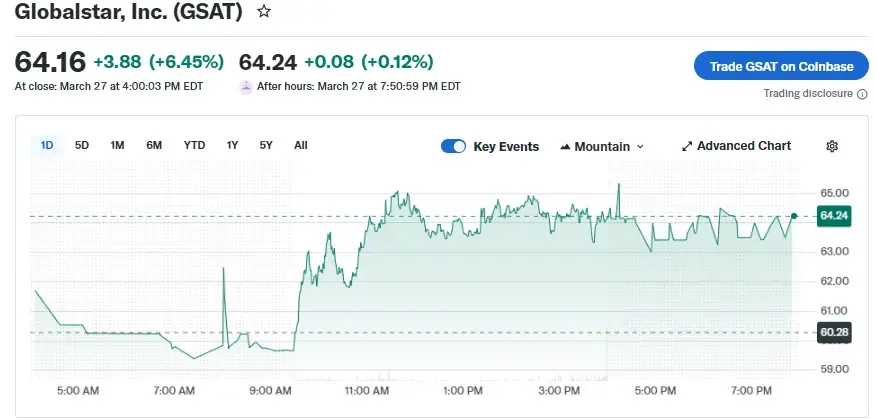
A day trader may have bought Globalstar stocks at 4:30 AM EDT while they were trading at $60, and sold the shares at 11:00 AM while they were trading at $64.20. The trader profits from the $4.20 increase in per-share price.
Day trading’s main benefit is the potential for fast, significant returns. It can also offer greater flexibility and help sharpen your decision-making skills.
How Does Day Trading Work?
With this method, the primary focus is short-term price changes caused by intraday market volatility and driven by recently released news, statements, announcements, and reports. Day traders often identify entry and exit points by analyzing charts and market patterns.
Short-term timeframes are a vital part of technical analysis for day trading because they help traders analyze trends and momentum in the market. Common timeframes used in day trading include 1-minute, 5-minute, 15-minute, and 1-hour.
Potential Risks in Day Trading
Before you start day trading, you should understand that it comes with significant risks. Here are the most common ones:
- Potential for significant loss: Due to market volatility, you may lose a substantial amount within a short period.
- Emotionally driven mistakes: The time-sensitive nature of these trades may cause you to feel fear, greed, or psychological pressure, leading to mistakes like overtrading.
- Lack of free time: The strategy requires you to spend many hours on analysis and execution, which may hinder your ability to keep a full-time job.
- Vulnerable to technical failures: With day trading, minor lags in internet connection or technical glitches are more likely to cause losses or missed opportunities.
Differences Between Day Trading and Swing Trading
Although day trading and swing trading are styles that require active strategies, they are not the same. The table below highlights their key differences.
| Attribute | Day Trading | Swing Trading |
|---|---|---|
| Time Horizon | Within a day | Within several days or weeks |
| Focus | Short-term price movement | Medium-term price movement |
| Overnight Exposure | None | Yes |
| Volatility and Risk Level | High | Lower |
| Time Commitment | Usually full-time | Mostly part-time |
| Chart Analysis | Minutes or hours | Days or weeks |
Day Trading Strategies
Let’s explore some of the top strategies used by day traders.
1. Scalping
This is a short-term trading style that involves buying and selling multiple assets within the same day. It’s arguably the most popular stock day trading strategy. Scalpers aim to profit from small market fluctuations that happen within minutes or even seconds. Eventually, all of the little gains add up. Here’s a tutorial video that demonstrates scalping in more detail.
2. Breakout Trading
With breakout trading, you enter the trade when the price moves above or below a predetermined level. Breakout traders often analyze the market for weeks to define a resistance level, which potentially represents a continuous price rise or a support level, which indicates a price decline.
For example, imagine a stock has been fluctuating between $50 and $80 for weeks. A breakout trader may expect a continuous rise when the price eventually moves above $80 (resistance level) or a continuous decline when the price falls below $50 (support level) and trade accordingly.
3. Momentum Trading
Momentum trading involves buying and selling assets based on the strength of their price trends. This method relies on the idea that tradable assets that reach a high price will attract more investors, leading to a further increase in prices. The reverse is the case for assets that hit a low price.
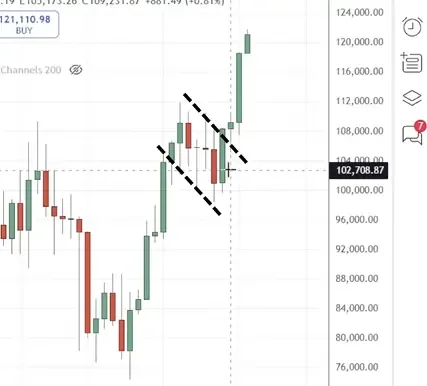
But to successfully day trade on momentum, you need excellent timing and discipline. Those attributes will allow you to exit when the momentum slows and gain sizable profits. Please note that recent news releases are the biggest market triggers for momentum trading.
4. Trend Trading
With trends trading, the investor buys or sells assets based on the sustained upward or downward price movement over a period. The aim is to grab a piece of profit from the existing trend movement before the market changes.
Over any given period, you can identify an upward or downward trend by the magnitude of its highs and lows. Watch this video to learn how to identify market trends easily.
5. Reversal Trading
This practice, also known as contrarian or counter-trend trading, requires you to enter the market right when the price trend is about to change (move in the opposite direction). Trend reversals usually occur at the point when an asset becomes overbought or oversold.
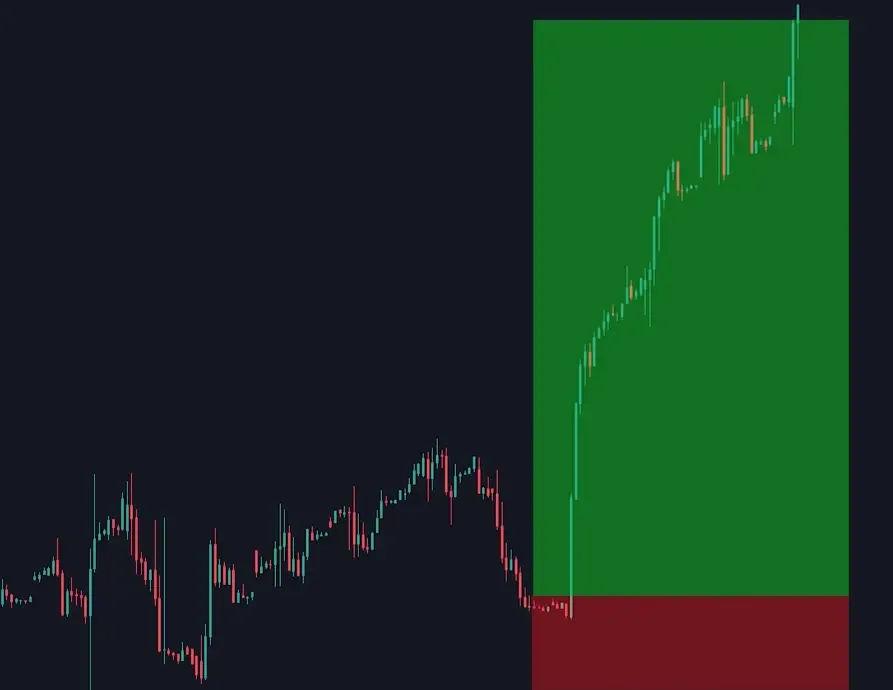
When that happens, the price drops or rises depending on the situation. Reversal trading requires an in-depth understanding of market behavior, near-perfect timing, and risk management skills.
6. Arbitrage
Arbitrage is the practice of exploiting price discrepancies by simultaneously buying and selling identical assets in different financial markets. The goal is to gain risk-free profits by setting up your trades in a way that ensures no negative cash flow.
For example, if you notice that a stock is priced at $100 in Market A and $105 in Market B, an arbitrage move would be buying the stock in Market A at $100 and immediately selling it in Market B at $105. The result is a $5 profit per share.
7. News Trading
The news trading technique involves leveraging market news and sentiment that can create volatility in price movements. You would need to predict how the market would react to news and make trading decisions based on the direction you expect prices to move in the near future. Many prop trading firms don’t allow news trading. However, a select few do.
8. High-Frequency Trading
This method uses algorithms and advanced computer programs to execute a large number of orders quickly. With High-Frequency Trading (HFT), you can execute thousands of trades in seconds.
This method is ideal for day trading because it allows you to use algorithms to identify arbitrage opportunities, order flow inefficiencies, bid-ask spreads, and news releases and profit from them at scale. It’s often used by banks and other investment institutions. For instance, Citadel Securities made $1.7 billion in one quarter using HFT.
9. Pivot Point Trading
Similar to breakout trading, this strategy relies on established support and resistant levels. Invented by floor traders on the stock exchange, pivot points allow you to identify those levels by calculating the average of the previous period's high, low, and closing prices. Mathematically,
Pivot Point = (Highest Price + Lowest Price + Closing Price) / 3
Traders use pivot points to determine price barriers (resistance and support levels) from simple calculations.
How to Start Day Trading: Step-By-Step Beginner’s Guide
Follow these steps to go from complete beginner to successful day trader in 2026.
1. Choose a Market and Learn the Basics
Understand day trading and how it works by reading guides just like this one. You may gain additional knowledge from reading books and watching tutorial videos created by seasoned traders.
Based on your capital, interest, research, experience, and trading style, decide what market you would like to trade. Your options include forex, futures, stocks, and crypto. Take some time to study the market before making a move. It usually takes 30-60 days to become familiar with the basics of a new market.
2. Choose the Right Trading Platform
Select the most reliable brokerage for your chosen markets. A few of the best day trading platforms for beginners are Charles Schwab, moomoo, eToro, and Webull. While some of them may offer lower fees, others may provide better tools. Try to find the right balance.
3. Create a Day-Trading Plan
As a beginner, you need a strategy and plan to help inform your trading decisions. A typical day trading plan should include the following information:
- Profit target
- Risk tolerance
- Entry and exit criteria
- Stop-loss levels
- Position sizing
- Maximum daily drawdown or loss limit
While crafting your plan, feel free to use any of the strategies we listed in this post. Always stick to it, especially in high-pressure situations.
4. Follow Relevant News Sources
Get the best news and announcements for your day trades from:
- Real-time news outlets
- Reputable market analysts
- Social media accounts with reliable market insights
- News aggregator sites
- Market trackers
Stay up-to-date by receiving mobile notifications when possible.
5. Practice Simulated Day Trading
Implement your strategies in a simulated environment (paper trading). You don’t have to use real money for this, but we highly recommend that you trade real market conditions. Most trading platforms will provide demo accounts with virtual funds to test strategies.
6. Trade with Real Funds
When you’ve found what strategies work for you, you can proceed to trading with real, funded accounts. Note that due to the risky nature of day trading, many people prefer to work with a prop firm rather than put up their own money.
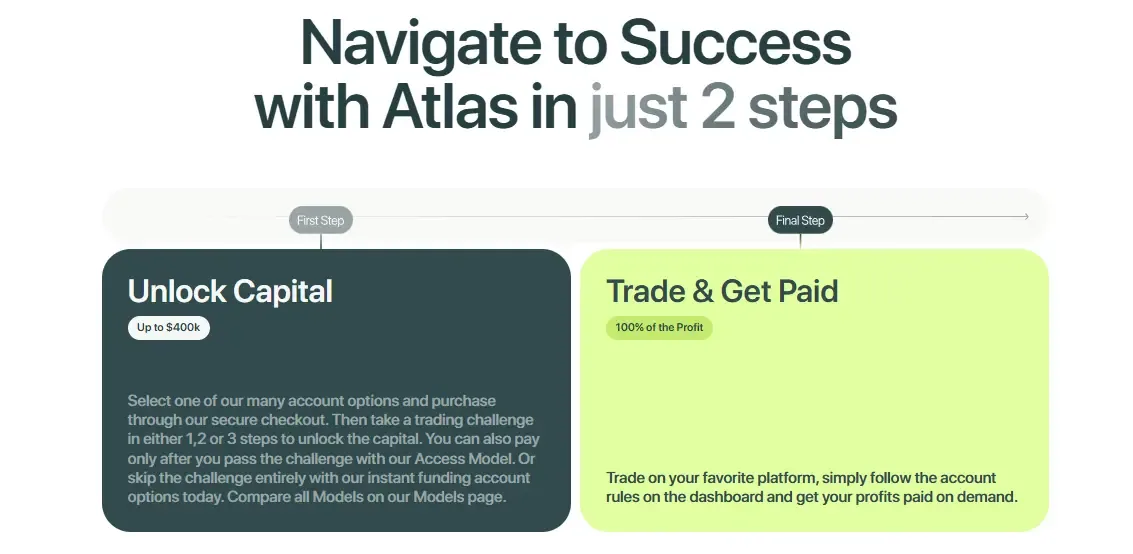
AtlasFunded, considered the best prop firm for beginners, provides access to up to $400k in company funds.
7. Review and Improve
Monitor your performance and identify the mistakes you made. Then use that information to adjust your strategy.
Tips for New Day Traders
Here are practical tips to improve your chances of success as a beginner.
Best Markets to Start With
Kick off your day trading journey by picking only one market with high liquidity and moderate volatility. Most experts recommend that beginners start with forex. However, stocks and futures are viable options too.
Risk Management
Risk only small amounts of your capital. We recommend 0.5% to 1% per trade for beginners (2% when you’re more experienced). You should also set a max. daily drawdown and never break it. Always remember to place stop-loss orders—they help minimize losses.
Picking Assets to Trade
Focus on high-volume instruments with some volatility. You want to leverage their tighter spreads, smooth movements, and ease of entry/exit.
Technical Analysis
Charts are your most important companions in day trading. Choose 1-2 timeframes with repeatable strategies.
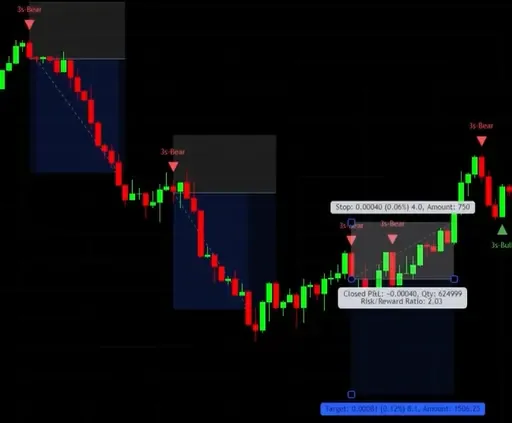
At the beginning, we recommend that you discard 1-minute timeframes because of their erratic nature. Rather, stick to 15-minute and 1-hour charts for identifying structural bias. Let the 5-minute timeframe serve as the entry trigger.
Mistakes to Avoid
- Taking day trading as a “get rich quick” scheme.
- Trying to master more than one strategy at the beginning.
- Sticking to one strategy without making constant tweaks.
- Not taking paper trading as seriously as live trading
- Increasing position size to make up for a loss
- Not establishing a clear exit strategy
FAQs
Yes, you can start day trading with $100. That is enough capital to learn how to day trade with real funds. You can also use $100 or less to secure up to $25,000 in trading funds on remote prop firms like AtlasFunded.
Buying and selling securities within the same day (day trading) is legal. However, it is regulated by bodies like the SEC and FINRA to prevent market manipulation and other illegal practices.
The 3-5-7 rule limits risk to 3% per trade, 5% total exposure, and targets 7% profit to protect capital and optimize returns.
Conclusion
Day trading is not for the faint-hearted. But with the right strategy, discipline, and effort, beginners can achieve success using the technique. Use what you learn in this post to create a solid plan and set risk management parameters. When you’re ready to start trading, you can get funded by becoming a prop trader. Good luck!
Ready to take the next step? Explore AtlasFunded's prop trading programs today and put your trading skills to work with the capital to match.

 Senior Writer at Atlas Funded





 Your move
 Only pay the full fee after you pass
 UK
UK ES
ES DE
DE FR
FR IN
IN IT
IT