.png)






.svg.webp)
.svg)

What Is a Prop Firm? A Complete Guide for Traders in 2026

.svg)
Make money trading our capital
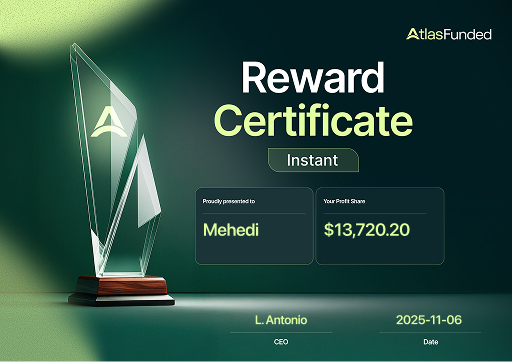

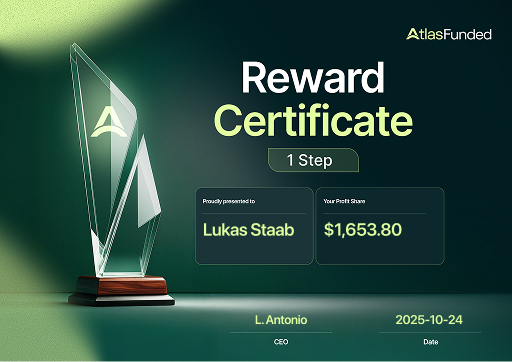
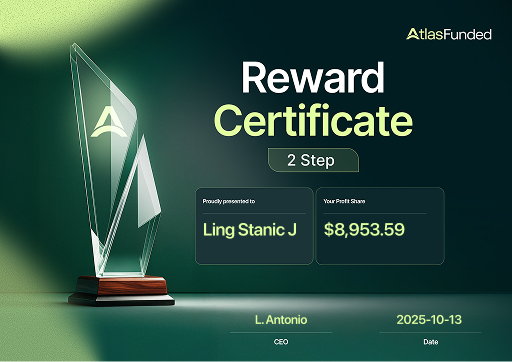
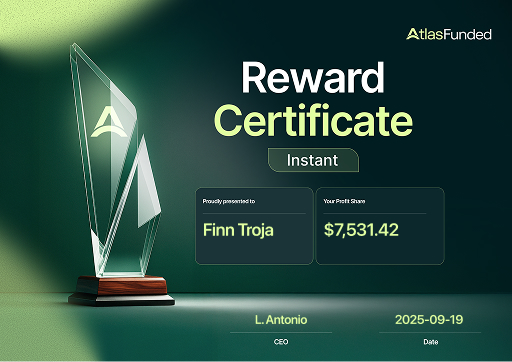

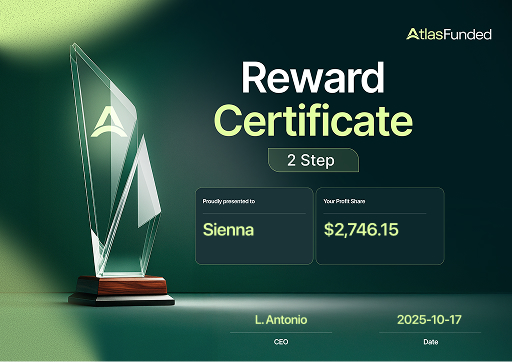

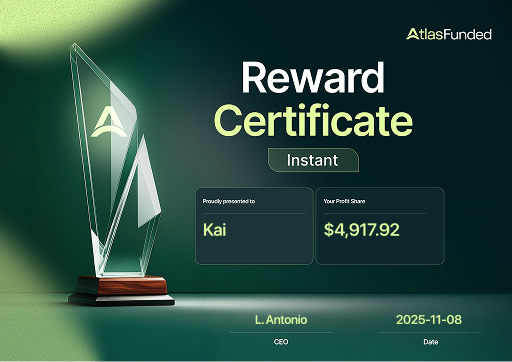
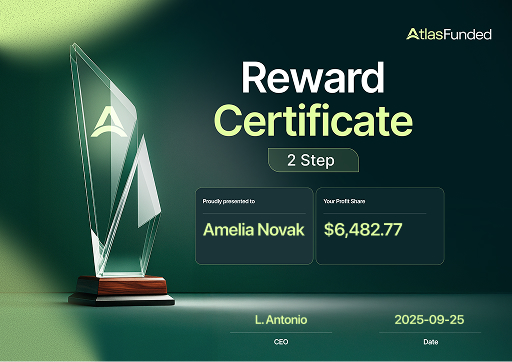
What if you could trade a $100,000 account without having $100,000? That is the basic idea behind a prop firm. You prove you can trade. They give you the capital. You keep most of the profits. They absorb the losses.
It sounds like a good deal because, for the right trader, it is. The prop firm industry has grown into a $20 billion market, with thousands of traders worldwide accessing funded accounts instead of draining personal savings.
This guide covers what a prop firm actually is, how the process works from signup to payout, how it compares to trading with a broker, and what to look for before you hand over a dollar.
What Is a Prop Firm?
A prop firm is short for a proprietary trading firm. The original version of this model dates back decades. Banks and financial institutions would trade their own capital in the markets rather than managing client money. The profits went directly to the firm, and the traders who generated those profits were employees working from a desk on a trading floor.
The modern version looks very different. Today's prop firms operate online as remote prop trading firms and provide funded accounts to individual traders anywhere in the world. Instead of hiring you, they evaluate you. You pay a fee, complete a trading challenge on a simulated account, and if you pass, the firm gives you access to its capital. You trade it. You profit. You keep 70 to 100% of the earnings, depending on the firm.
The firm makes money in two ways. First, from the challenge fees paid by every trader who enters the evaluation, whether they pass or not. Second, from their share of profits generated by the traders who do get funded.
This model exploded after 2020 because it solved the biggest problem retail traders face: not enough capital. A trader with $500 in personal savings can pay $100 for a challenge and, if they pass, trade a $50,000 funded account. That kind of access did not exist for individual traders ten years ago. Now it is available from dozens of firms competing for your business.
How Do Prop Firms Work?
The process is more straightforward than most people expect. Here is what actually happens from the moment you sign up to the moment money hits your account.
Step 1: Choose a Challenge
You pick an account size, anywhere from $5K to $200K or more, and select a challenge format. Most firms offer 1-step evaluations with a single profit target, 2-step evaluations that split the target across two phases, or instant funding where you skip the test entirely and pay more for the privilege.
Entry fees range from $1 at some of the cheapest prop firms like Atlas Funded to over $1,000 for the bigger accounts.
Step 2: Pass the Evaluation
This is where most people's journey ends, honestly. You trade a simulated account under the firm's rules. Hit the profit target, usually 6 to 10%, without breaching the drawdown or daily loss limit. Meet the minimum trading day requirements.
Most firms in 2026 give you unlimited time, which helps, but it does not make the rules any easier.
Step 3: Get Funded
You passed. Congratulations, you are now in the roughly 5 to 10% of traders who make it this far.
Now, in this step, you have to complete your KYC verification, receive your funded account credentials, and start trading the firm's capital.
One thing to watch here is that the funded account rules might be slightly different from the challenge. Drawdowns could tighten or consistency rules might appear.
Make sure you read the fine print before your first trade, not after your first breach.
Step 4: Trade and Get Paid
You keep 70 to 100% of the profits, depending on the firm and whatever add-ons you picked at checkout.
Payouts follow a schedule, bi-weekly, weekly, or on-demand. Atlas Funded processes payouts within 24 hours, which is about as fast as it gets in this industry.
Step 5: Scale Up
If you perform well, your account grows.
Some firms bump your balance by 25% every few months. Others let you scale all the way to $2M.
The challenge fee also gets refunded after a set number of payouts at most firms, which means the total cost of getting funded can drop to almost nothing if you stay consistent. Almost nothing. Not nothing. You did pay for that first challenge.
How a Prop Firm Works (From Start to Payout)
Prop Firms vs. Brokers: What Is the Difference?
This trips up a lot of people, especially early on. A prop firm and a broker are not the same thing, even though you will use both when you trade.
A broker executes your trades. You open an account, deposit your own money, and trade with your own capital. If you make money, great. If you lose it all on a Monday morning because you ignored your stop loss, that is entirely on you.
The broker does not care either way. They make money from spreads, commissions, or both, regardless of whether your account survives the week.
A prop firm, on the other hand, provides capital. You do not deposit trading funds. You pay a challenge fee, prove you can trade without destroying an account, and if you pass, the firm gives you its money to trade with.
You keep most of the profits. If you blow the funded account, the firm absorbs the loss. Your downside is capped at whatever you paid for the challenge.
Many prop firms route their trades through a broker. So when you are trading a funded account at Atlas Funded, your trades might execute through a brokerage like ThinkMarkets in the background. The broker is the plumbing. The prop firm is the one handing you the capital and splitting profits with you.
The practical difference for you as a trader is risk. With a broker, you can lose everything you deposit. With a prop firm, the worst case is losing your challenge fee. That is why the model appeals to traders who have the skill but not the savings to trade at a meaningful size.
Prop Firm vs. Broker Comparison
Who Are Prop Firms For?
Prop firms are not for everyone, but they solve a very specific problem for a very specific type of trader.
The most obvious group is traders who have the skill but not the capital. Say you have spent months or years developing a strategy that works on a $500 account, but $500 does not generate meaningful income. A prop firm lets you trade $50K to $200K without saving for the next decade. Your strategy stays the same. The account size changes everything.
Then there are traders who want to limit personal risk. Depositing $10,000 into a broker account and watching it shrink because of one bad week is a painful way to learn. With a prop firm, your worst day costs you the challenge fee. Not your rent money. Not your savings. Just the fee.
Experienced traders looking to scale also fit the model well. If your strategy produces 5% monthly on a $10K account, that is $500. The same 5% on a $100K funded account is $5,000.
Prop firms offer that scaling path without requiring you to compound for years. Swing traders holding positions for days or weeks should look at firms with specific holding policies.
What to Look for Before Joining a Prop Firm
Knowing what a prop firm is and how it works is useful. Knowing which ones to avoid is what actually saves you money.
Transparent Rules
Every rule should be published and easy to find before you pay anything if a prop firm is legit. Drawdown type, daily loss calculation, profit target, consistency requirements, news trading policy, payout schedule.
If you have to buy the challenge to discover how the rules actually work, treat that as your first red flag. Firms that hide the fine print usually have something in the fine print worth hiding.
Drawdown Type
This one detail changes the entire difficulty of the challenge. Static drawdown sets a fixed floor that never moves. Trailing drawdown follows your equity upward, meaning you can breach while in overall profit.
Same fee, same profit target, but completely different experience. If you do not know which type your firm uses before you start trading, you are gambling on the rules, not just the market.
Payout History and Reputation
Check Trustpilot, G2, Reddit, and Discord for reviews. Look for verified payout screenshots and read the recent reviews, not the ones from two years ago.
A firm that was paying out reliably six months ago but has a wave of complaints today is a firm in trouble.
Multiple Platforms
After 80+ firms collapsed in 2024 when MetaQuotes revoked MT4 and MT5 licenses, platform diversity went from a nice feature to a survival requirement. Look for firms offering at least two or three options.
MT5, cTrader, TradeLocker, Match Trader. If a firm runs on a single platform and that platform pulls the plug, your funded account goes with it.
Fee Refund Policy
When does the firm refund your challenge fee? After the first payout? The fourth? Never? This directly affects your total cost of getting funded. Some firms like Atlas Funded refund at the 4th payout. Others never refund at all. Know the answer before checkout.
Atlas Funded checks these boxes with published rules across their help center, static drawdown on funded accounts, multiple platform options, and payouts processed within 24 hours.
That is the baseline you should expect from any firm you are considering. If a firm cannot match it, there are plenty that can.
Common Prop Firm Terms Explained
If you have been reading about prop firms for more than five minutes, you have probably run into terminology that assumes you already know what it means. Here is a quick reference so you are not Googling mid-challenge.
Prop Firm Glossary
A model where the full challenge fee is only charged after you successfully pass. Atlas Funded's Access model is one example.
FAQs
Conclusion
A prop firm is one of the most practical ways to trade with real capital without putting your savings on the line. The model is simple enough: prove you can trade, get funded, keep most of what you earn.
But simple does not mean easy. The 90% who fail challenges are proof of that. And the 80+ firms that shut down in 2024 are proof that not every company offering you capital deserves your trust.
The traders who do well with prop firms are the ones who read the rules before they pay, choose firms with verified track records, and treat the challenge like a job interview rather than a lottery ticket. The ones who fail tend to skip all three.
Do your research. Check the reviews. Understand the drawdown type. And if you want to start with almost no financial risk, firms with pay after you pass models let you prove yourself before you commit.
.webp)
.webp)
.png)



.avif)
.avif)
.avif)
.avif)