



If you’re getting started in the financial markets, one of the first decisions you’ll face is whether to day trade or invest. Both strategies aim to grow wealth, but they operate on completely different timelines, risk levels, and skill requirements.
Some traders thrive on the fast-paced action of entering and exiting positions within minutes or hours. Others prefer the steady, long-term growth that comes from holding investments for years. Simply knowing the differences between day trading and investing can help you avoid costly mistakes and choose a path that fits your lifestyle.
We’ll break down how each strategy works, what they have in common, and how to decide which approach makes the most sense for you.
Day Trading vs. Investing: Key Differences
| Aspect | Day Trading | Investing |
|---|---|---|
| Timeframe | Short-term (Minutes to hours) | Long-term (Months to years or decades) |
| Goal | Profit from short-term price movements | Build long-term wealth through appreciation and compounding |
| Activity Level | Active (requires constant market monitoring) | Passive (periodic check-ins are sufficient) |
| Analysis Method | Primarily technical analysis (charts, patterns, indicators) | Primarily fundamental analysis (financials, business model, valuation) |
| Risk Level | High (amplified by leverage and volatility) | Moderate (buffered by time and diversification) |
| Capital Required | $25,000 minimum (U.S. PDT rule, lower when using prop firm) | Start with as little as a few dollars |
| Tax Treatment | Short-term capital gains (up to 37%) | Long-term capital gains (0%–20% depending on income) |
| Profit Potential | High upside, but most traders lose money | Relatively stable profit over time |
| Skill Required | Advanced technical knowledge and emotional discipline | Fundamental research and patience |
What is Day Trading?
Day trading is exactly what it sounds like. It involves buying and selling financial instruments within the same trading day to profit from short-term price movements. A day trader never holds positions overnight. Trades are opened and closed before the market closes. The goal is to capture small price fluctuations across multiple trades per session.
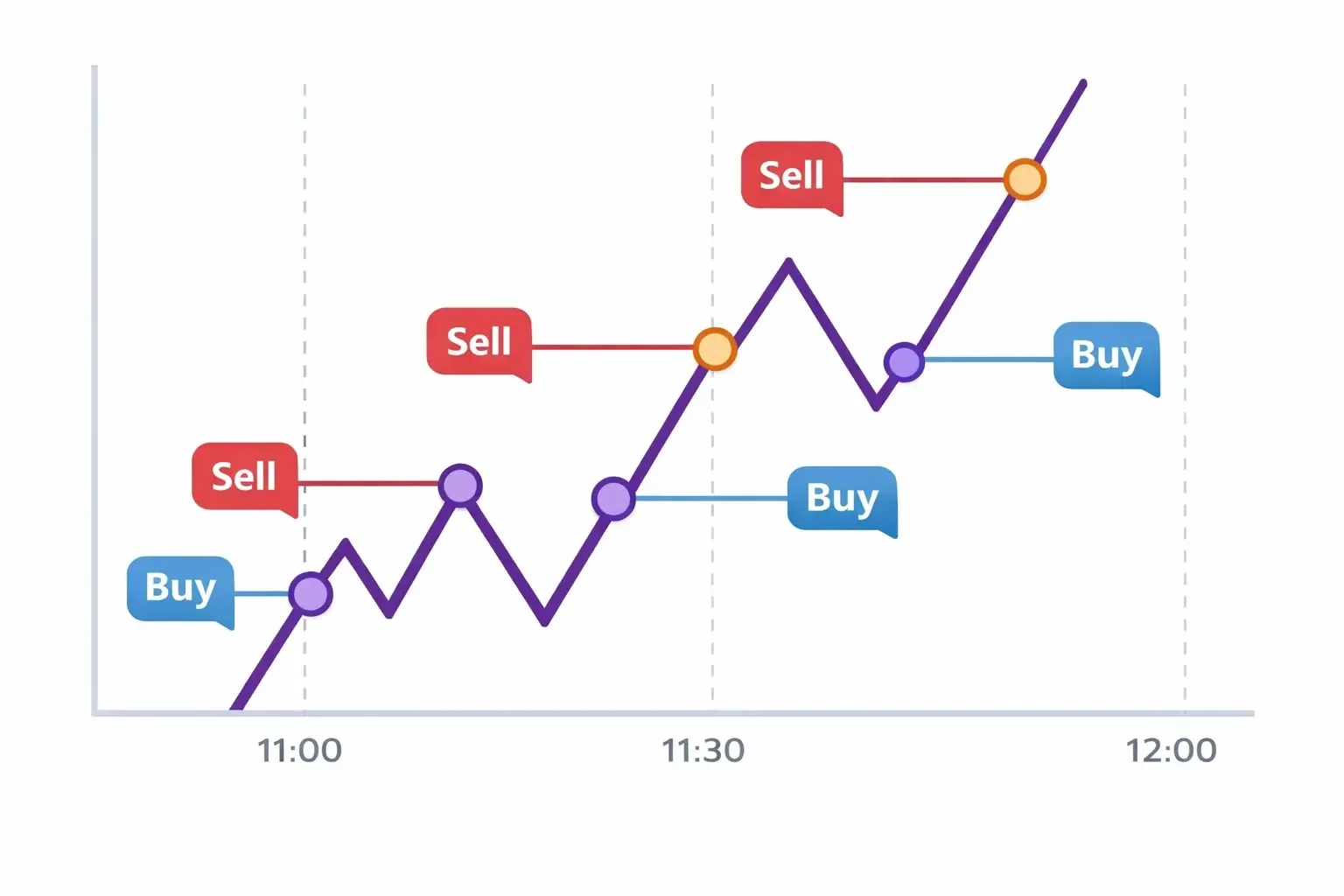
Day traders rely almost exclusively on technical analysis, reading charts, identifying patterns, and using indicators to predict near-term price direction. They move fast, make quick decisions, and accept that losses are part of the game.
Common assets used in day trading:
- Stocks and penny stocks
- Stock options and futures
- Forex currency pairs
- Cryptocurrencies (Bitcoin, Ethereum, and altcoins)
- Leveraged ETFs
- Commodities (crude oil, gold)
- Index futures (S&P 500, Nasdaq 100)
What is Investing?
Investing is the practice of buying assets and holding them over an extended period, typically months, years, or even decades, with the expectation that they'll appreciate. Unlike day trading, investing is fundamentally a long-game strategy that leverages the power of compound growth, dividends, and, most importantly, time.
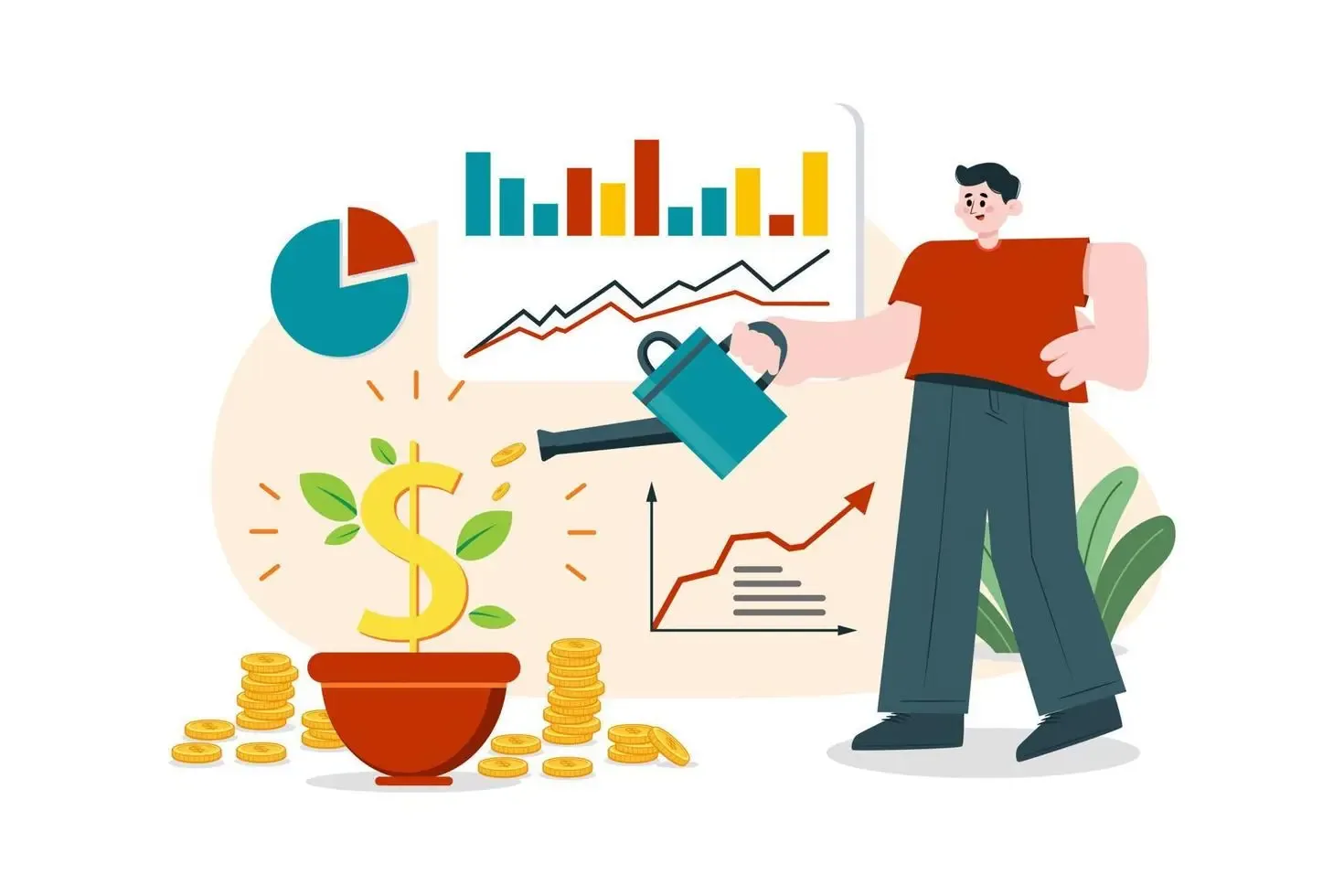
Long-term investors analyze not only the price chart but also other factors affecting the asset, such as the company's earnings potential, competitive advantage, quality management, and more. Some of the most successful investors in history built their wealth by identifying quality assets and holding them patiently.
Common assets used in investing:
- Stocks (individual company shares)
- Index funds and ETFs (S&P 500, total market funds)
- Bonds (government and corporate)
- Real estate and REITs
- Mutual funds
- Cryptocurrencies as long-term holdings (BTC, ETH)
- Dividend-paying stocks
- Retirement accounts (401(k), IRA, Roth IRA)
Similarities Between Day Trading and Investing
For all their differences, day trading and investing share more common ground than most people realize. Understanding these similarities can help you build a more complete financial strategy.
Both Make Money Through Financial Markets
From a basic perspective, both day trading and long-term investment involve putting money into the financial markets to make returns. Regardless of whether an individual trades a currency pair for a small profit or buys some Tesla stock for a five-year investment plan, the underlying financial markets remain the same. Both approaches require a brokerage account, market access, and a working knowledge of how financial assets behave.
Both Require Research and Analysis
While day traders do analysis based on indicators, charts, and short-term trends in prices, long-term investors study earnings reports, balance sheets, and other metrics such as the price-earnings ratio. Although the methods and metrics are different, the importance of doing thorough research before making any investments cannot be understated.
Both Involve Financial Risk
There's no risk-free version of either approach. While it can be argued that most day traders lose more than they make, the truth is that even long-term investing comes with its fair share of risks.
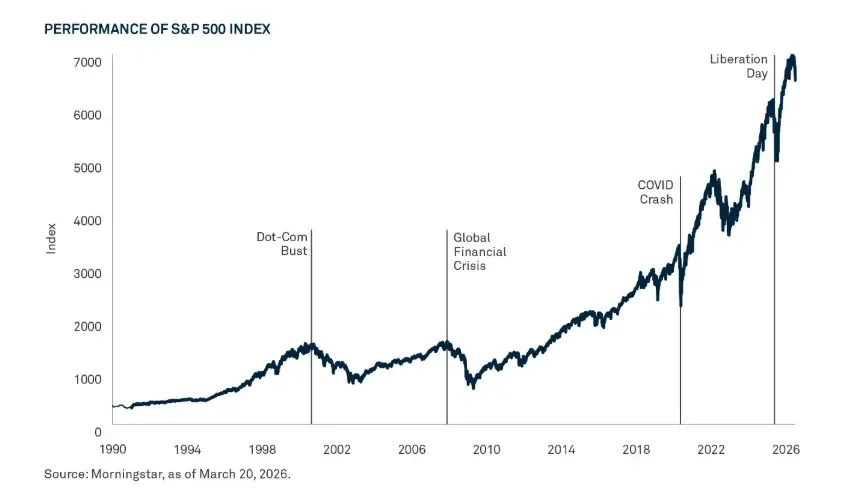
Long-term S&P 500 investors survived the dot-com bust (-47%), the 2008 financial crisis (-55%), and even the selloff during the 2020 pandemic crisis (-34%), all within two decades. Both day trading and long-term investing are risky financial practices.
Both Require Emotional Discipline
Emotional discipline isn't a concern for just day traders. Panic selling during market corrections, chasing a hot stock after it's already rallied, or overreacting to negative news are investing mistakes rooted in the same psychological traps that sink day traders.
Numerous studies have shown a clear link between trading driven by emotions and poor performance. Subjects whose emotional reactions to monetary gains and losses were more intense on both sides exhibited far worse trading performance.
Whether you're a day trader watching a position go red in real time or a long-term investor watching your portfolio drop 25% in a bear market, the ability to stay rational under pressure is the single most important skill in either discipline.
Differences Between Day Trading and Investing
Let’s explore the differences between both money-making techniques.
Timeframe
This is the most defining difference between the two. Day trading involves buying and selling within the same trading day, focusing on short-term price movements, while investing is about buying assets to hold for the long term, benefiting from market growth over time.
An investor might hold a position through multiple earnings cycles, market corrections, and economic cycles before selling. Some even have retirement accounts they won’t touch for years. This difference in time horizon shapes everything else, from the type of analysis used to the tax outcome of any profits earned.
Risk Level and success rate
Day trading is unambiguously riskier, especially for retail traders. Only about 12% of all traders consistently turn a profit, and traders who use margin for leverage suffer an average return of -4.53%. The reality is, approximately 70-90% of day traders lose money, with most losing their capital.
Long-term investing has a completely different risk profile. The average stock market return is about 10% per year as measured by the S&P 500 index, though that average is reduced by inflation, which causes investors to lose 2% to 3% of their purchasing power annually.
The S&P 500's average 30-year return from 1996 through 2026 is 7.40%, a period that included both the dot-com crash and the 2008 financial crisis. Time smooths out the volatility. Staying invested over time consistently rewards patience in a way that day trading simply cannot replicate for most people.
Analysis Method: Technical vs. Fundamental
Day traders rely on technical analysis, using tools and indicators such as charts, candlestick patterns, volume spikes, moving averages, RSI, and MACD. What matters is where the price is going in the next few minutes or hours. Day traders look for stocks and trading pairs with momentum and volatility to take advantage of price action and the liquidity needed to get in and out of positions quickly.
Long-term investors do the opposite. They study earnings growth, return on equity, free cash flow, and management quality. They care more about whether a business will be worth more in 10 years. Daily price charts are mostly noise to a serious long-term investor. Investors are focused on good companies with long-term potential, whereas volatility that creates opportunity for a day trader often signals instability to an investor.
Capital Requirements
Getting started as an investor requires almost nothing, with many brokers now offering fractional shares and zero-minimum accounts. Day trading requires real capital, both legally and practically. In the U.S., the Pattern Day Trader rule requires at least $25,000 in a margin account to execute four or more intraday trades within five business days. Most traders use prop trading firms to reduce the massive starting capital requirement.
Even beyond the regulatory minimum, meaningful day trading income typically requires a much larger capital base, since the price movements being exploited are often small.
Tax Treatment
Both day traders and investors pay capital gains tax. The difference is in how much tax you pay. In the U.S., trading profits are generally classified as short-term capital gains since they are realized within one year. This means the gains day traders make are taxed at the individual's ordinary income tax rate, which typically ranges from about 10% to 37% depending on income level.
Unlike day trading, long-term investors usually hold investments for more than a year, which means profits are classified as long-term capital gains and taxed at a lower rate of around 0%, 15%, or 20%. After accounting for taxes and transaction fees, the already-thin margins of day trading get even thinner.
Time Commitment
Day trading requires hours of preparation before the market opens, active monitoring throughout the trading session, and post-market review. Most serious day traders treat it as a full-time profession.
Long-term investing, by contrast, is considerably low-maintenance once your strategy is set. A diversified index fund portfolio may need rebalancing once or twice a year. A longer-term strategy not only aligns with the principle of risk management but also supports the goal of achieving financial security and growth without exposing oneself to the competition and volatility of day trading.
Day Trading vs. Investing: Which to Choose?
There's no universal "better" answer. The right choice depends entirely on factors like your financial goals, personality, available time, and willingness to accept risk. Let's break it down clearly.
Choose Day Trading If…
You have the time and temperament for it: Day trading is not a side hustle. It demands full attention during market hours, fast decision-making, and the ability to handle losses. If you're the kind of person who works well under pressure and can detach emotionally from money in real time, you might have the psychological makeup for it.
You want income now, not decades later: What makes day trading appealing to most traders is speed. A successful trade can be profitable within minutes. If your goal is to generate active income from trading instead of waiting years for a portfolio to compound, day trading is the tool.
You're willing to accept the risk: Profitable day traders understand that losses are operating costs, that risk management is non-negotiable, and that consistency is key. Studies show that 80% of retail day traders quit within the first two years. The realistic odds of success of making a living from day trading are low, requiring adequate capital and hours of devotion to honing your strategy.
Choose Investing If…
You're focused on building long-term wealth: The math strongly favors patient capital. If you had invested $10,000 in the S&P 500 in 1996, you'd now have about $180,000. The compounding effect of staying invested over decades is one of the most powerful wealth-building forces available to anyone.
You can't dedicate full days to the market: Most people have jobs, families, and lives that make it impossible to monitor the market actively. Long-term investing works around your schedule. An index fund or a well-diversified stock portfolio doesn't require constant attention, just discipline and patience.
You want tax efficiency and lower stress: Long-term capital gains rates are dramatically lower than short-term rates, and long-term investors make far fewer transactions, meaning lower fees and less taxable activity.
Conclusion
Day trading and investing aren't opposites; they're just different tools with different purposes. Day trading is high-skill and high-risk, offering the potential for fast income. Investing is patient and built for the long game, leveraging the power of time and compounding to steadily grow wealth with better odds of success.
You don't necessarily have to choose just one. Many financially savvy individuals actually do both by committing the majority of their capital to long-term investments like index funds, blue-chip stocks, and crypto assets (BTC and ETH) for long-term upside, while dedicating a smaller portion (typically 5-20%) to active trading.
If you want to day trade without risking your personal savings, joining a prop trading firm like AtlasFunded is a smart way to go. This way, you can trade with significantly more capital than you'd have on your own, capturing larger gains while keeping your personal savings intact and available for long-term investing.
Ready to take the next step? Explore AtlasFunded's prop trading programs today and put your trading skills to work with the capital to match.
Ready to take the next step? Explore AtlasFunded's prop trading programs today and put your trading skills to work with the capital to match.
Explore funding programs
 Senior Writer at Atlas Funded





 Your move
 Only pay the full fee after you pass
 UK
UK ES
ES DE
DE FR
FR IN
IN IT
IT