.png)






.svg.webp)
.svg)

How Do Prop Firms Make Money? Business Model Explained

.svg)
Make money trading our capital




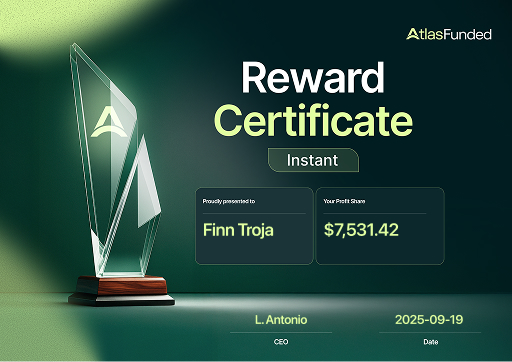

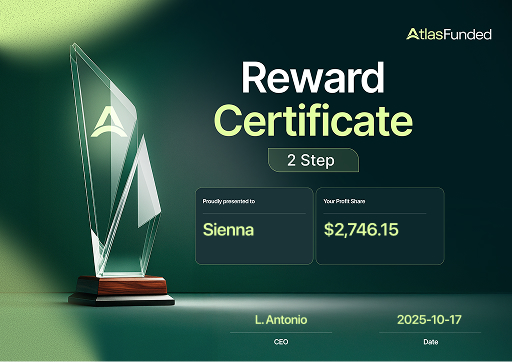

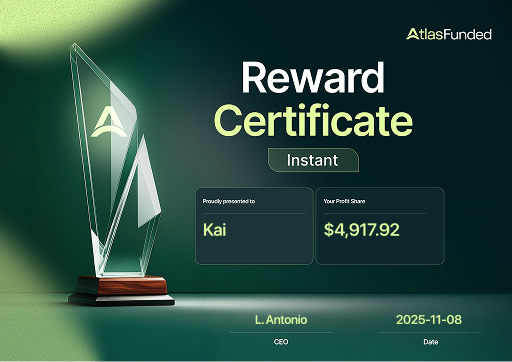
You pay $500 for a challenge. You get access to a $100,000 account. If you pass, you keep 80 to 90% of everything you earn. The firm takes on the risk, provides the capital, and processes your payouts.
So where exactly is the firm making money in this arrangement?
The honest answer is that most of it comes from the prop traders who do not pass. With industry fail rates sitting above 90%, the math works in the firm's favor long before a single funded trader requests a withdrawal.
Challenge fees, resets, add-ons, and profit splits all contribute. Some firms also copy winning traders into live markets, though most operate entirely on simulated accounts.
None of this is automatically a problem. The model works when the rules are fair, and the payouts are real. It breaks down when firms design evaluations to maximize failures rather than identify skilled traders. Understanding how prop firms make money helps you tell the difference.
The Short Answer
Most prop firms make money from three sources:
- Challenge fees from traders who fail the evaluation
- Profit splits from the traders who pass
- And, in some cases, copying successful traders' positions into live markets
Challenge fees are the biggest piece by far. When 90 out of every 100 traders fail a $500 evaluation, the firm collects $45,000 before a single funded trader earns a dollar.
The few who do pass generate profit-sharing revenue, but that amount is small compared to the volume of fees coming in from the other side.
This is not a secret, and it is not inherently a scam. It is a business model where the firm bets that most traders will not pass, and the revenue from those failures funds the payouts to the ones who do.
Casinos work on a similar principle. So do insurance companies. The question is not whether the math favors the firm. It always will. The question is whether the firm gives you a realistic shot at being in the small percentage that gets funded and paid.
Where the Money Comes From
Here are all the prop firm revenue streams to answer your question regarding how do prop firms make money.
Revenue Stream #1: Challenge Fees
This is where the real money is. You pay a one-time fee to enter the evaluation. If you fail, the fee stays with the firm. Most firms offer discounted resets at 20 to 40% off, which sounds generous until you realize the reset is also revenue.
With pass rates between 5 and 10%, the vast majority of challenge fees come from traders who never see a funded account. That is not a flaw in the model. That is the model.
The math tells the story. A firm sells 5,000 challenges at $500 each in one month. That is $2.5 million. If 90% fail, the firm retains $2.25 million. Of the 500 who pass, maybe 50 reach a payout averaging $3,000. After paying out $150,000, the firm still nets over $2 million. Challenge fees do all the heavy lifting. Profit sharing is a rounding error.
This is why the rules matter more than the fee. A firm that sets a 2% trailing drawdown and a 15% profit target is not trying to find skilled traders.
It is optimizing for failures. A firm with static drawdowns, realistic targets, no time limits, and transparent rules is betting on keeping funded traders around long term.
If you are unsure how to tell the difference, our guide on whether prop firms are legit covers the red flags to watch for.
Revenue Stream #2: Profit Splits from Funded Traders
This is the revenue source that makes the model sound fair. You profit, the firm takes a cut, everyone wins. And that is true, as far as it goes.
Once funded, the firm keeps 10 to 30% of your profits, depending on the split. On an 80/20 arrangement, $10,000 in profit means $2,000 for the firm. Simple enough.
But profit sharing is one of the smallest revenue streams at most firms. Only 5 to 10% of traders pass. Of those, many breach within weeks.
Industry data covering 300,000 accounts shows that only about 7% of all traders ever receive a payout, averaging roughly 4% of the funded account value. Compare that to millions in monthly challenge fees, and you can see why profit splits are not keeping the lights on.
That said, profit sharing does align interests. A firm that wants more of this revenue needs to keep good traders funded longer, which means fair rules and fast payouts. Firms offering up to 100% splits, like Atlas Funded through its add-on system, are trading away this cut entirely in exchange for volume and loyalty.
Revenue Stream #3: Add-Ons, Resets, and Subscriptions
Beyond challenge fees and profit splits, most firms have a handful of smaller revenue streams that add up quietly.
Add-ons are the most common. At checkout, you will often see options to upgrade your profit split from 80% to 100%, switch to weekly or on-demand payouts, remove minimum trading day requirements, or increase your account size by 10 to 15%.
Each add-on typically costs an extra 10 to 20% on top of the base fee. A $500 challenge can become $650 or $700 by the time you have ticked the boxes you actually want. The base price gets you in the door, and the add-ons get you what you need.
Resets are another steady stream. When you fail a challenge, most firms offer a discounted retry at 20 to 40% off the original price. This keeps traders in the system instead of losing them to a competitor.
It also means a trader who fails three times at a 30% discount has still paid more than twice the original fee. Resets are good for the trader compared to buying a full new challenge, but they are also very good for the firm.
Some firms, particularly in the futures space, charge monthly subscription fees on funded accounts. You pay a recurring fee for access to the capital regardless of whether you are profitable that month. This creates predictable revenue for the firm but adds ongoing cost pressure on the trader.
A smaller number of firms sell educational products, mentorship, trading courses, or premium tools. This is typically a minor revenue stream, but it exists.
None of these is inherently unfair. Add-ons give you flexibility, and the resets save you money versus a full repurchase. The key is knowing the total cost before you compare firms. A challenge advertised at $99 that costs $160 after add-ons and takes three attempts is a $480 investment. A $500 challenge you pass on the first attempt and get refunded at your 4th payout costs you nothing in the long run.
If entry cost matters to you, see how the cheapest prop firms compare once you factor in the real price.
Do Prop Firms Actually Trade Real Money?
This is the question most articles dance around. So let us just say it plainly.
Most retail prop firms do not place your trades into live markets. At least, not during the challenge. And sometimes, not even after you pass. Your funded account runs on a simulated environment that mirrors real market conditions, real prices, and real spreads, but no actual orders hit the exchange.
The profits you earn are paid from the firm's revenue pool, primarily from challenge fees, not from market returns generated by your positions. This surprises many traders who assume that "funded" means their orders are being executed with real capital somewhere.
At most firms, it does not. The word "funded" refers to the account balance you are given access to, not the execution model behind it.
Some firms do copy successful traders' positions into live accounts. This is sometimes called A-book execution or hybrid execution. The firm identifies consistently profitable funded traders, mirrors their trades in a real brokerage account, and earns actual market returns on top of challenge fee revenue. But this is a minority practice.
It is difficult to verify from the outside, and it carries risk for the firm because most funded traders eventually breach their accounts. Copying a trader who is profitable today but blows up next week means the firm eats a real loss.
A handful of firms, like The 5%ers, have operated with real capital accounts for funded traders since inception. But this is the exception in a market dominated by simulated execution.
Execution Models at Prop Firms
What This Means for You as a Trader
Understanding how prop firms make money is not just an interesting business lesson. It directly affects which firm you should trust with your challenge fee.
The Firm's Incentives Affect Your Experience
A firm that earns 95% of its revenue from failed challenges has a financial reason to make passing difficult. That does not mean every firm with high fail rates is acting in bad faith.
Trading is genuinely hard. But when you see a 2% trailing drawdown, a 12% profit target, and consistency rules buried in page 14 of the terms, those are not neutral design choices. They are the rules of a firm that has optimized for fee collection.
Look at the Total Cost, Not Just the Challenge Fee
The challenge fee is the entry price, not the final price. A $99 challenge that costs $160 after add-ons and takes three attempts to pass is a $480 investment. A $500 challenge that you pass on the first attempt and get refunded at your 4th payout costs you nothing in the long run.
Firms with pay after you pass models take this a step further. You pay $1 to $5 to start, and the full fee is only charged after you have already proven you can pass. That flips the typical risk structure entirely. The firm is betting on you before you are betting on them.
Payout Consistency Is the Real Test
You can read about revenue models and execution types all day, but the simplest way to evaluate a firm is to check whether they are actually paying traders. Consistently, on time, and without any excuses.
Search the firm's name on Trustpilot, Reddit, and Discord. Look at the most recent reviews, not the ones from two years ago. A firm that was paying reliably six months ago but has a growing wave of complaints today is a firm whose model may be under pressure.
Payout speed and reliability tell you more about the health of the business than any marketing page ever will.
Questions to Ask Before Joining Any Prop Firm
Conclusion
How do prop firms make money? Mostly from challenge fees. The 90%+ of traders who fail the evaluation fund the payouts to the few who pass. Profit splits, add-ons, resets, and in some cases live market execution contribute additional revenue, but challenge fees are the engine.
This is not a dirty secret. It is a business model. And like any business model, it can be run honestly or dishonestly. The firms that design fair evaluations, process payouts reliably, and build infrastructure that survives market disruptions are the ones worth trading with.
The firms that set impossible rules, delay withdrawals, and depend on an endless stream of new signups to cover existing payouts are the ones that end up on the shutdown list.
Now that you know where the money comes from, you are in a better position to evaluate where yours should go.
.webp)
.webp)
.png)



.avif)
.avif)
.avif)
.avif)