


Ever since the first iteration of ChatGPT hit the market, “AI for day trading” has become one of the top topics-of-interest in the trading world. In 2026, it’s used for many different things: a chatbot that helps draft a trading journal entry, a machine learning model that scans thousands of stocks overnight for setups, and a fully automated system that places live trades without a human touching the mouse.
But a big mistake that a lot of traders looking to incorporate AI into their setup is treating all the above as the same tool. That’s how you get into trouble.
This guide breaks down what AI actually does well for a day trader in 2026, what it still can't do reliably (including a limitation that catches out a lot of people who haven't run into it yet), and how to build a realistic workflow around the tools that actually exist today rather than the ones marketing copy implies exist.
A Useful Way to Think About "AI" in Trading
First, let’s talk about AI in trading.
Not all AI tools operate at the same level of sophistication, and knowing the difference matters more than knowing any single tool's feature list. A rough hierarchy helps:
| Level | What It Does | Examples |
|---|---|---|
| Rule-Based Automation | Executes fixed if-then logic with no learning involved (for example, buying when RSI crosses below 30). | Traditional Expert Advisors (EAs), simple trading bots. |
| Statistical and Quantitative Models | Runs pattern recognition and backtesting across historical data using established statistical methods. | Scanner tools with pre-built pattern detection. |
| Machine Learning (Adaptive) | Continuously adjusts its own parameters based on what is working in recent market conditions. | Trade Ideas' Holly engine, TrendSpider's Strategy Lab. |
| Large Language Models (LLMs) | Processes and generates natural language, reasons over text-based information, summarizes, and analyzes. | ChatGPT, Claude, Gemini. |
Most of what gets marketed simply as "AI trading" in 2026 sits somewhere in the middle two tiers. Large language models, the tools most beginners reach for first because they're free and conversational, sit in a different category entirely, with a different set of strengths and a specific, structural weakness worth understanding before relying on one for anything time-sensitive.
What Large Language Models Actually Do Well
Tools like ChatGPT, Claude, and Gemini are genuinely useful for a day trader, just not in the way a lot of beginners initially expect.
- Research and synthesis: Feeding an LLM a stack of earnings call transcripts, recent news coverage, or economic commentary and asking it to summarize the key themes or flag what's changed since a prior briefing is a strong use case. This is language processing – which is exactly what these “large language” models are built for.
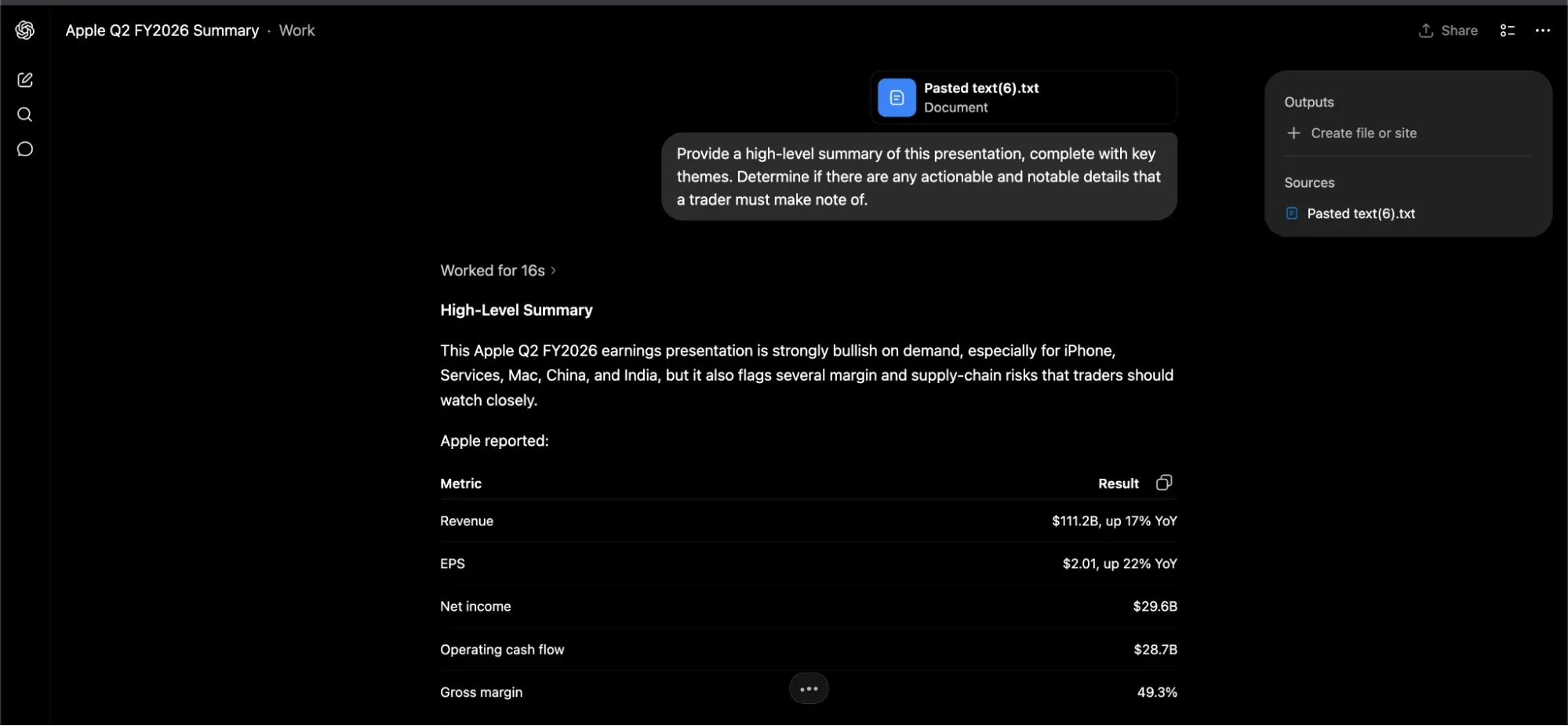
- Drafting and refining a trading plan: Working through position sizing rules, entry criteria, or a full written plan with an LLM as a sounding board tends to surface gaps a trader might miss reviewing their own notes alone.
- Writing code for backtesting: An LLM can write a script for a Python library like Backtrader or FinRL faster than most traders could from scratch, which lowers the barrier to actually testing an idea against historical data.
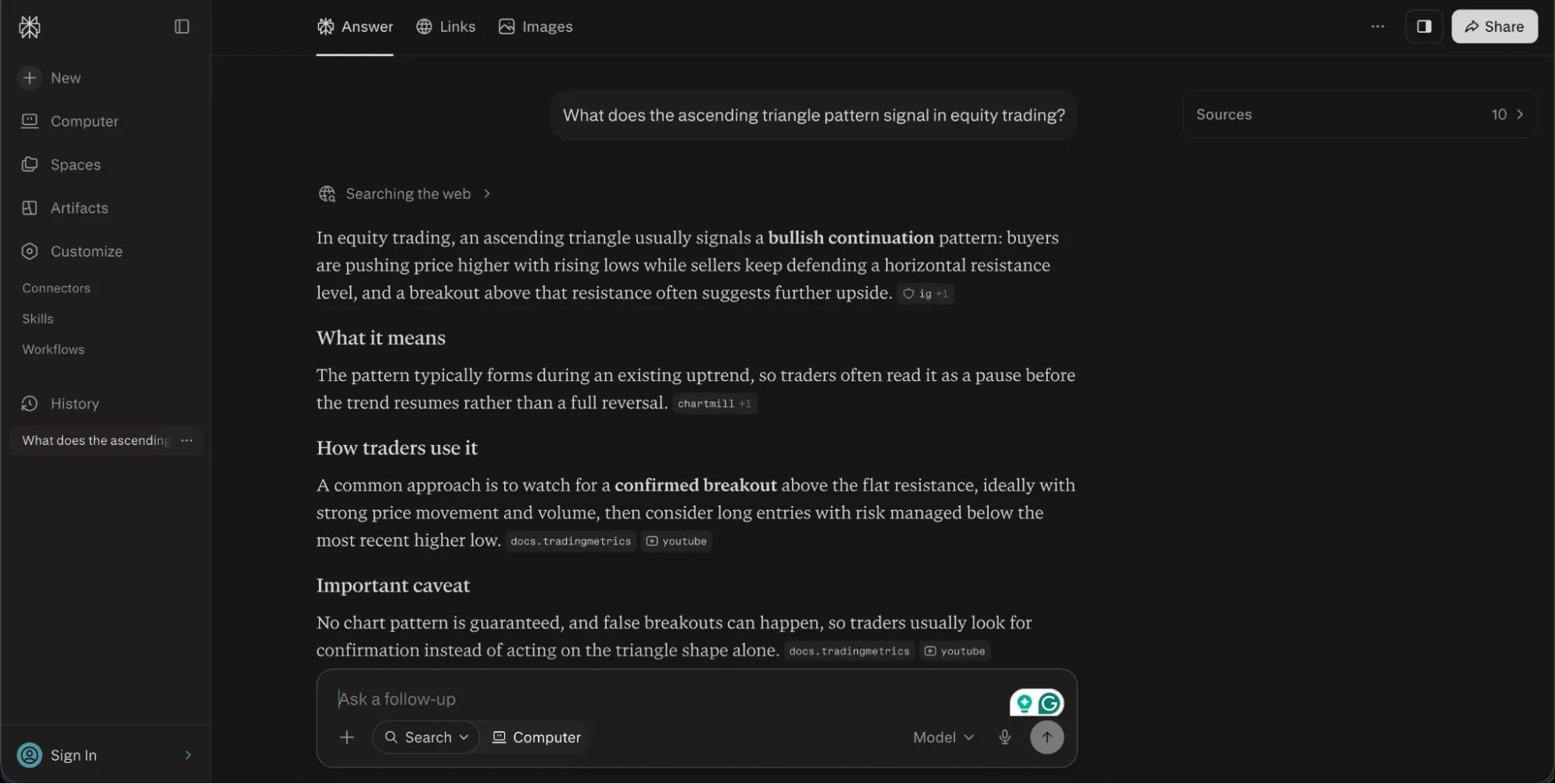
- Explaining concepts: Asking an LLM to explain what a particular indicator measures, how a specific chart pattern typically behaves, or what a term in an earnings report means is a legitimate, low-risk use case that many beginners underuse.
What Large Language Models Cannot Do Reliably
As amazing as LLMs are, they do have tradeoffs. If you’re going to build a new AI-integrated workflow, it’s crucial that you understand these:
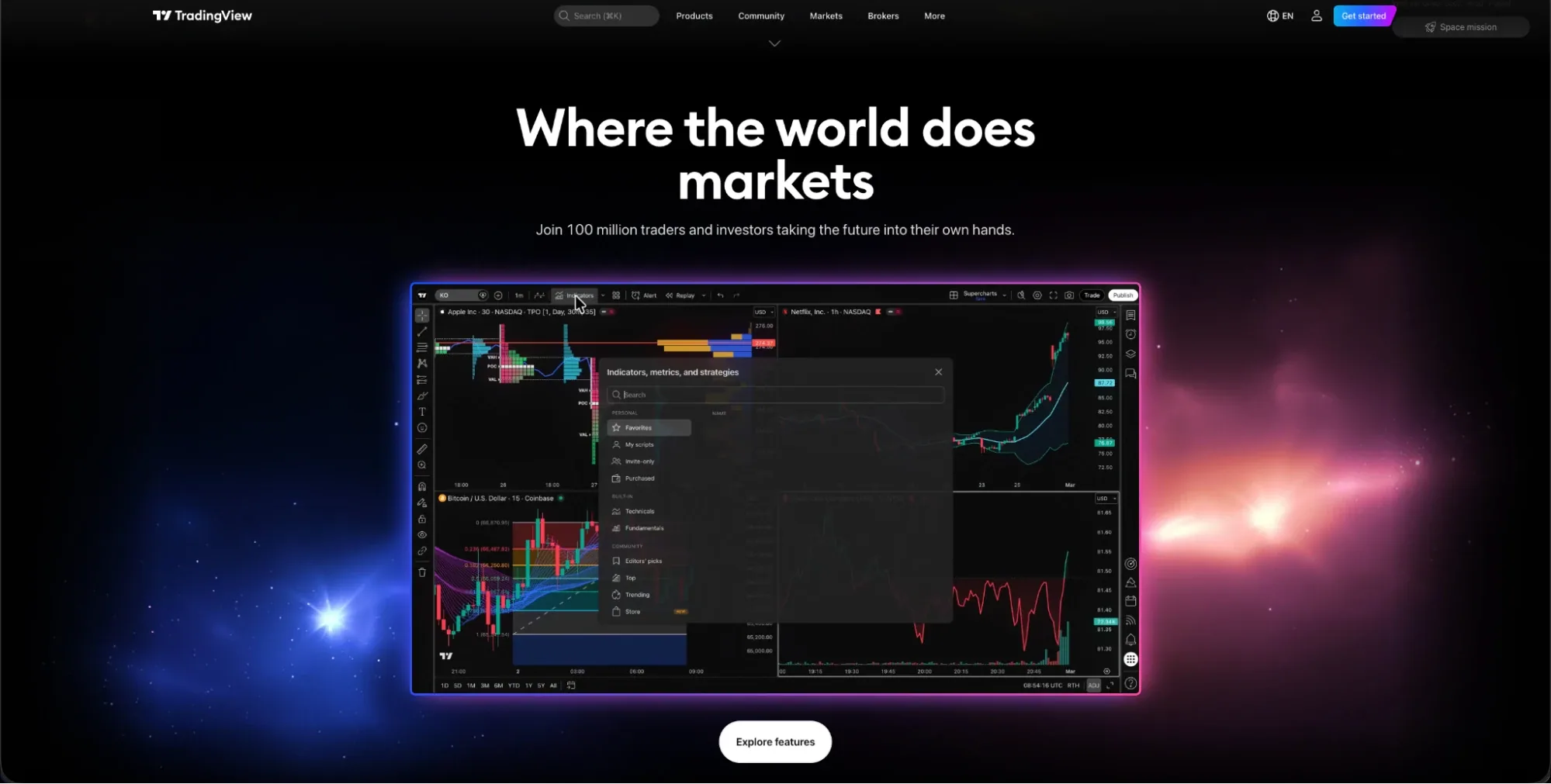
- No LLM has a live connection to real-time market data by default: Asking ChatGPT, Claude, or Gemini what a stock or crypto asset is trading at right now will not reliably produce an accurate answer, because the underlying model doesn't have a continuous feed into live prices, order books, or intraday volume. Some products layer web search or specific data connections on top of the base model to partially address this, but the core model itself operates on a training cutoff and cannot see the market moving in real time the way a broker's platform or a charting tool like TradingView does.
- For instance, when we asked ChatGPT: “What is your knowledge cutoff date?” The response is June 2024 for GPT 5.6 Luna. Simply put, it has zero knowledge of anything that comes after this date.

- Hallucination is a very real, structural risk: LLMs work by generating the most statistically likely next piece of text based on patterns learned during training. It doesn’t generate verified, checked facts. As such, when asked about a specific, granular data point (an exact price level, a specific recent statistic, a niche company's financials), a model can produce a confident, plausible-sounding answer that's simply wrong, without flagging any uncertainty. We call these “hallucinations”, and they’re particularly dangerous in a financial context.
- They cannot reliably read a chart image and mark exact price levels. While modern LLMs can process images, pulling precise support and resistance levels off a chart screenshot and matching them accurately to the price axis is not something these models do consistently well. A charting tool like TradingView remains the more reliable source for that specific task.
- Speed makes them unsuitable for anything time-sensitive. There's an inherent lag between an event occurring and an LLM being able to process and respond to it. For scalping, news-reaction trades, or anything measured in seconds, a language model is structurally the wrong tool, regardless of how capable the underlying model is at reasoning.
This isn’t to say that LLMs are completely useless for trading – they’re one of the best tools out there to help you research and synthesize market information, and, for beginners, a brilliant learning resource. However, their limited live market awareness, imprecision in recalling data, and the tendency to hallucinate mean traders who aren’t aware of the risks and mitigate can easily be led astray.
Machine Learning Tools Built Specifically for Trading
Serious systematic day traders typically don't use stock ChatGPT, Claude, or Gemini for trading. Instead, they use a separate category of tool built specifically for market analysis: platforms like Trade Ideas, whose Holly AI engine runs overnight backtests across thousands of setups and surfaces a shortlist by morning, or TrendSpider, which combines automated chart pattern detection with a strategy-testing engine called Strategy Lab.
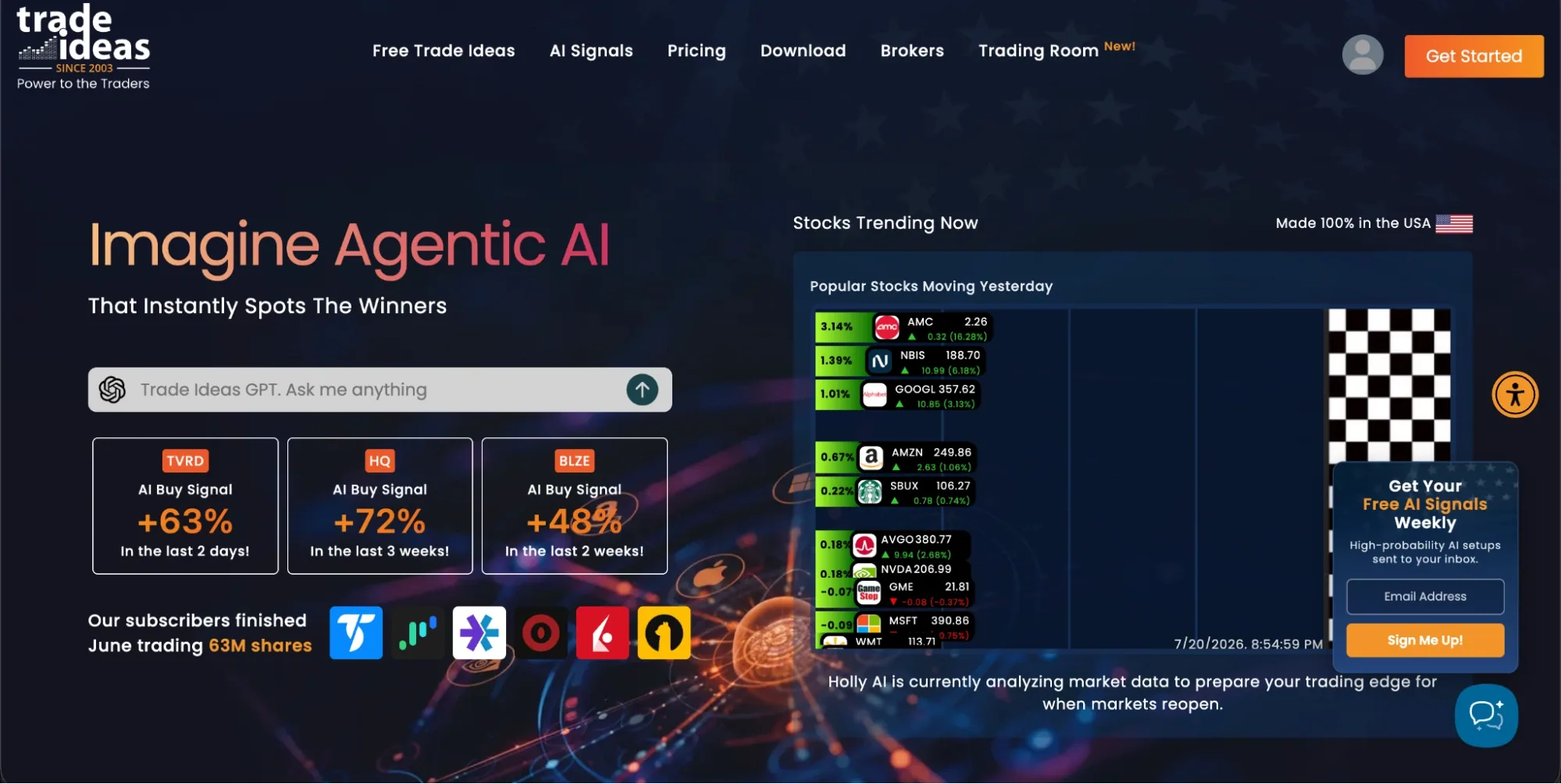
Platforms in this category run continuous backtests across large numbers of strategies and present a filtered shortlist of setups that meet specific statistical criteria, such as a historical win rate above a threshold combined with a favorable risk-to-reward ratio. Some connect directly to a broker for automated execution once a strategy has been vetted -- others simply surface the signal and leave execution to the trader. Because these tools are built around structured market data rather than natural language, they don't carry the same real-time data limitation that LLMs do.
The tradeoff is usually cost and a steep learning curve. Trade Ideas and TrendSpider are both subscription-based, sometimes running into hundreds of dollars a month for full access, and getting real value out of either requires you to know exactly what the underlying model is actually optimizing for rather than blindly following whatever signal appears on screen.
Building a Realistic AI-Assisted Workflow
Putting the pieces together, here’s what a basic, AI-integrated workflow would realistically look like:
- Use an LLM for pre-market research: Summarize overnight news, earnings reports, or economic releases relevant to a watchlist, and flag anything that's changed since the last session.
- Use a dedicated scanning or backtesting tool for signal generation, since this is structured market data analysis, not language processing, and benefits from a tool built specifically for that task.
- Verify any specific price level, statistic, or data point an LLM provides against a live source (a broker platform, a charting tool, an official data feed) before acting on it. Never treat an LLM's stated number as confirmed without a separate check.
- Execute through your broker or platform directly, not through a language model, for anything time-sensitive.
- Use an LLM again after the session for review, feeding it the day's logged trades and asking what patterns show up.
This sequence is – in our opinion – a reasonable starting point, though it’s by no means a fixed rule. Adjust the mix to fit your own tools and trading style.
AI, Automated Trading, and Funded Account Rules
Automated and AI-assisted trading exists on a spectrum from a simple rule-based expert advisor to a fully autonomous system placing trades without human review. Prop firms vary in how they treat automated strategies on funded and evaluation accounts, with some permitting expert advisors and algorithmic trading outright and others applying specific restrictions or requiring disclosure.
Before running any automated or AI-assisted strategy on a funded account, confirming the specific rules that apply to that account is a necessary step rather than an optional one, since running an undisclosed automated strategy against a firm's terms can jeopardize an otherwise successful evaluation.
At Atlas Funded, traders are free to use Expert Advisors (EAs) and automated strategies on their funded accounts without limitations – sole exception being High-Frequency Trading (HFT) EAs.
Common Mistakes When Using AI for Trading
- Treating an LLM's stated price or statistic as verified fact: Without a live data connection, a confident answer is not the same as an accurate one. Always cross-check specific numbers against a real source before trading on them.
- Over-automating a strategy before understanding the underlying logic: A backtested system that performs well on historical data but was never understood by the trader running it is difficult to troubleshoot when live conditions inevitably diverge from the backtest.
- Ignoring backtest overfitting: A strategy tuned too precisely to historical data can look exceptional in a backtest and perform far worse going forward, since it may have effectively memorized past noise rather than identified a durable edge.
- Outsourcing judgment entirely to a signal service: Following a black-box AI trading bot's signals without understanding what they're based on removes the ability to recognize when conditions have shifted enough that the underlying model's edge no longer applies.
- Skipping disclosure requirements on funded accounts: Running an automated or AI-assisted strategy without confirming it's permitted under a specific evaluation's rules risks the evaluation itself, independent of whether the strategy performs well.
Evaluating Third-Party AI Tools and Signal Services
Beyond the LLMs and dedicated scanning platforms already covered, a crowded market of standalone "AI trading bot" products has grown alongside them, and not all of it deserves equal trust.
Several platforms now let a trader build and run an automated strategy without writing a line of code, which lowers the technical barrier considerably. That's true of the machine-learning-powered tools too, but neither removes the need to understand roughly what the strategy is actually doing. A trader who can't explain why their automated system enters and exits where it does is poorly positioned to notice when that system stops working.
- Automated execution is only as safe as the testing and oversight behind it: A strategy that's been backtested thoroughly, forward-tested on a demo account, and paired with independently enforced risk controls (hard position sizing limits, a maximum drawdown rule that isn't just a suggestion) is a fundamentally different proposition than a system switched on and left unattended. The sophistication of the underlying model matters far less than whether these basics are in place.
- Transparency separates a legitimate signal service from a black box: A service that explains its methodology, publishes a verifiable track record, and lets a trader see why a given signal was generated is worth evaluating on its merits. One that provides only a buy or sell alert with no visibility into the reasoning behind it is much harder to trust, and nearly impossible to know when to stop trusting once market conditions shift and its edge, whatever it was, stops holding up.
Final Verdict: AI Can Be a Force Multiplier When Used Correctly
The genuine value in AI for day trading comes from matching each tool to what it's actually built for. But ultimately, there’s no AI or machine learning model that can replace the core skills required from a competent trader: the ability to read a market and manage risk, a firm grip on trading fundamentals, and a working strategy.
For traders who've built a tested process, with or without AI-assisted research along the way, and are ready to trade with more capital than a personal account allows, Atlas Funded offers a path to trading meaningfully larger size without years of personal savings behind it. Get funded and start trading real size today.
Ready to take the next step? Explore AtlasFunded's prop trading programs today and put your trading skills to work with the capital to match.
Explore funding programs
 Senior Writer at Atlas Funded


 Your move
 Only pay the full fee after you pass
 UK
UK ES
ES DE
DE FR
FR IN
IN IT
IT