


Day trading feels complicated when you're a beginner. There's simultaneously a lot to learn, and a lot of money on the line at the same time. That's why it's worth flagging a common mistake early: most people start in the wrong place by picking a ticker, watching it move, and assuming the next step is finding a strategy that explains the movement.
The traders who build durable skills approach it the other way.
They build the foundation first, practice in a controlled environment second, and only commit real capital once a specific setup has proven itself.
This guide covers how to actually learn day trading in 2026: what's changed regulation-wise, the learning sequence that holds up, and where prop firm funding fits into the process.
What Changed in 2026 (and Why It Matters for New Traders)
Since 2001, any margin account that executed four or more day trades in a rolling five-day window without $25,000 in equity lost day trading access entirely. That changed on June 4, 2026, when FINRA's overhaul of Rule 4210 took effect, formally eliminating the Pattern Day Trader designation and the equity requirement that came with it.
| Old PDT Framework (pre-June 2026) | New Intraday Margin Framework (post-June 2026) | |
|---|---|---|
| Equity requirement | $25,000 fixed minimum | $2,000 standard margin minimum |
| Trade count trigger | 4+ day trades in 5 business days | None |
| Buying power calculation | Prior day's end-of-day excess | Real-time intraday margin excess |
| Regulation T / Maintenance margin | Applies | Still applies, unchanged |
| Full rollout | N/A | Phased through October 20, 2027 |
A few things worth noting before assuming the change applies to your account immediately.
Brokers have an 18-month phase-in window through October 2027, and not all of them switched over on June 4.
Standard margin requirements stay in place: Regulation T, maintenance margin rules, and the $2,000 minimum equity for margin accounts are all unchanged. What's gone is the $25,000 floor and the four-trade trigger that came with it. Cash accounts, worth noting, were never subject to PDT rules in the first place and remain governed by T+1 settlement.
This is a meaningful shift for new traders. The old rule pushed many beginners into workarounds: cash accounts with settlement delays, futures markets they weren't ready for, or prop firms specifically to bypass the threshold. Those workarounds still have merit, just for different reasons now.
The Learning Sequence (That Actually Works)
Lots of people think what separates a master day trader from a novice is the strategies under their belt -- that’s not true. It comes from having a working understanding of market mechanics, the discipline to test one setup at a time, and a habit of tracking results honestly. Skipping straight to strategy selection is the trap most beginners fall into.
Here's the learning sequence that holds up instead.
Step 1: Understand the market mechanics first
Before any strategy makes sense, get comfortable answering these:
- How does order flow actually work?
- What does bid-ask spread mean in practice, and why does it widen during volatility?
- How does volume relate to price action?
- Why do certain times of day (the open, the close, lunch) behave differently?
If these questions feel unfamiliar, these are your starting points. The good news is that there are a lot of free resources for you to work through immediately, such as Atlas Funded’s blog section, which has various guides and tutorials on equity, forex, crypto, and prop trading.
Step 2: Pick one market and stay there
Forex, equities, futures, and crypto each carry different rules, hours, and margin structures. Splitting attention across all of them early slows progress. Traders who build an edge fastest tend to go deep on one market until the patterns feel familiar, then expand.
| Market | Typical Hours | Beginner Fit | Why |
|---|---|---|---|
| US Equities | 9:30 AM–4 PM ET (extended hours available) | Strong | Tight spreads on liquid names, deep educational content, familiar companies |
| Major Forex Pairs (EUR/USD, GBP/USD) | 24/5 | Strong | Consistent volume, low cost of entry, clear session overlaps |
| Futures (ES, NQ) | Nearly 24/5 | Moderate | Requires more capital discipline; steep learning curve on contract mechanics |
| Crypto | 24/7 | Weaker for structured learning | Volatility can mask whether a strategy or luck produced the result |
For most beginners, liquid US equities or major forex pairs are the logical starting point.
Step 3: Learn one setup before adding others
A breakout trade, a VWAP bounce, and a news-driven momentum play each demand a different read on the market and different execution habits. Master one until it's close to mechanical. Most experienced traders run a small number of setups they know extremely well rather than a long list they use inconsistently.
Step 4: Track every trade from the beginning
A trading journal is the main feedback mechanism for telling what's actually working apart from what looks like it's working after a few lucky outcomes. Every entry should include:
- Entry and exit price
- Position size
- The reasoning behind the trade before it was placed
- The result, and whether the outcome matched the original reasoning
Over time, patterns emerge: which setups convert consistently, which emotional states precede bad decisions, and which sessions produce weaker results. Whether you use journaling templates and dedicated tools or a simple spreadsheet – they’ll all work so long that you’re consistent with your logging.
How to Practice Day Trading Without Losing Real Money
Paper trading is how the mechanics get tested without financial consequences. It's available on every major retail platform, and quality varies enough to matter.
| Platform | Data | Cost | Notes |
|---|---|---|---|
| thinkorswim paperMoney | Live market data, slight delay | Free with account | Widely regarded as one of the more realistic simulators available |
| Webull Paper Trading | Real-time | Free with account | Unlimited virtual funds, full charting suite |
| TradingView Paper Trading | Real-time | Free tier available | Good for testing chart-based strategies before connecting a broker |
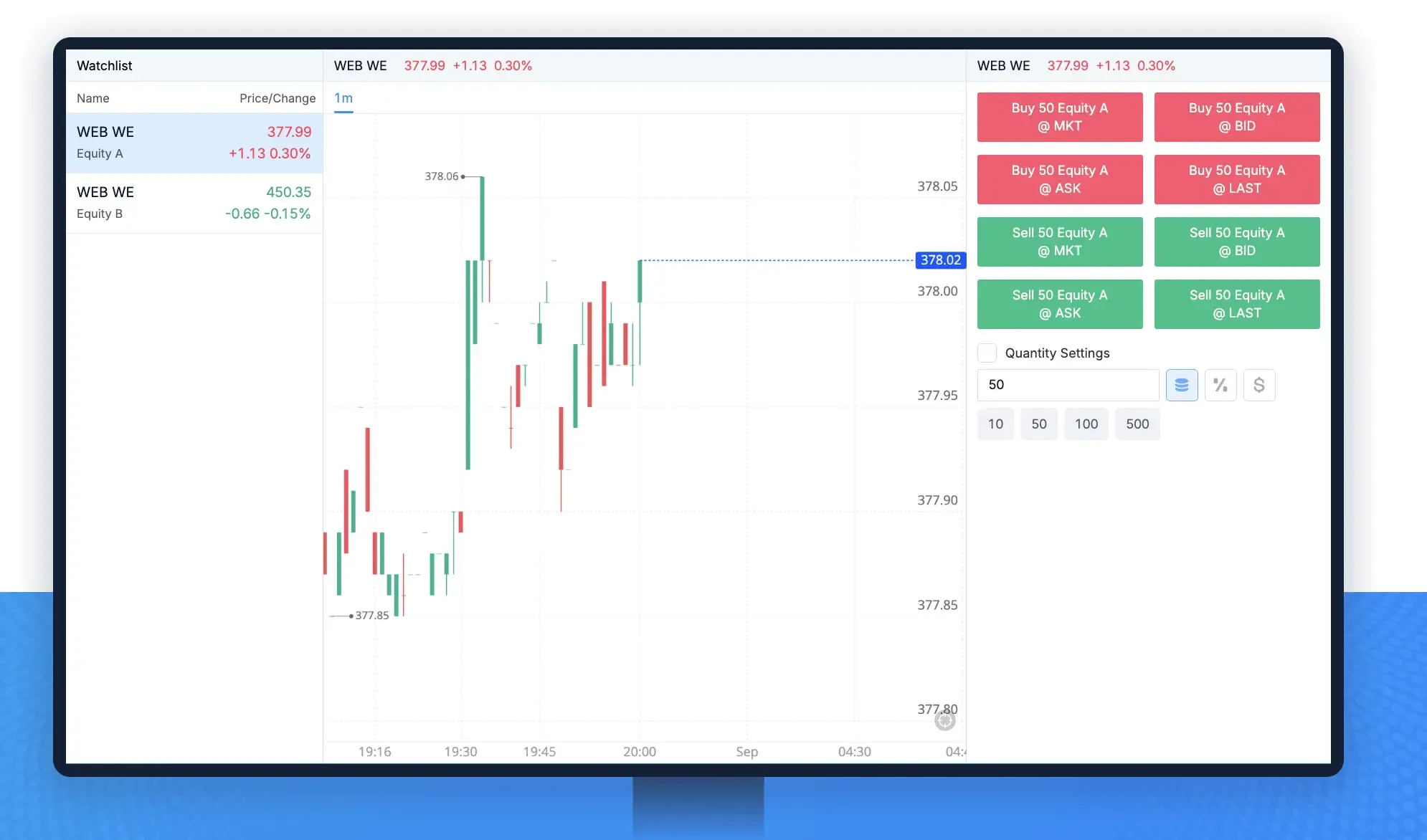
Use this phase to get comfortable with the execution flow: entry and exit timing, and the habit of sticking to a plan instead of reacting in the moment. Three to six months of that, with every trade logged and every loss reviewed honestly, is roughly what it takes to be ready.
A few habits worth building specifically during this phase:
- Trade the same hours you plan to trade live. There's no point practicing noon sessions if you intend to trade the open.
- Size as if the money is real. Paper trading 500 shares when you plan to live-trade 50 produces different decision-making, which defeats the purpose.
- Review losses weekly, not just wins. The traders who skip this step, or treat the demo phase as a formality, typically discover its value after the fact, once they've already spent real capital finding out what they didn't know.
Risk Management Before Strategy
Experienced traders have a risk management plan before they make a single trade, and they don't treat it as a fallback. Risk management is structural, built into every decision rather than added on afterward.
Position sizing follows from the stop-loss, not the other way around:
- Decide in advance what you're willing to lose on the trade.
- Place the stop at the level where the trade idea is proven wrong, not at an arbitrary distance.
- Size the position so a stop-out equals that predetermined risk amount.
Example: A $10,000 account risking 1% per trade means a maximum loss of $100 on any single position. If the stop-loss sits $0.50 below entry, the position size is capped at 200 shares ($100 ÷ $0.50), regardless of how confident the setup feels.
Stop-losses are non-negotiable for beginners. The impulse to move a stop when a trade goes against you is one of the most reliable ways to turn a small, manageable loss into a serious one. Hard stops placed before entry, left where they are, enforce the discipline that keeps single bad trades from defining an account's trajectory.
The other concept worth understanding early is drawdown. Every funded account, whether a personal brokerage or a prop firm evaluation, has a maximum drawdown rule. Hitting that level means the evaluation fails or the account gets restricted. Tracking real-time drawdown position, not just overall P&L, changes how you approach trade selection during a losing streak.
Where Prop Firm Funding Fits In
Removing the $25,000 threshold changes the prop firm argument somewhat, but doesn't eliminate it entirely.
One reason beginners turned to funded accounts was the PDT workaround: bypassing the trade-count limit and accessing larger capital without the equity requirement. That specific motivation is now less urgent for US equity traders, though the capital argument remains intact: a small personal account still limits position sizing, which limits both earnings potential and the ability to take meaningful trades on higher-priced instruments.
A trader running $5,000 of personal capital alongside a $100,000 funded account through Atlas Funded gets something beyond raw size: a feel for managing real capital under actual risk rules, which produces a different kind of education than a small account ever could.
| Entry Path | Upfront Cost | Best For |
|---|---|---|
| Pay-After-You-Pass | $0 | Traders who want zero risk before proving they can hit the profit target |
| $1 Access | $1 | Traders who want a low-barrier evaluation start |
| Standard Evaluation | Varies by account size | Traders comfortable with a traditional challenge structure |
| Instant Funding | Higher upfront, no evaluation | Traders ready to skip the evaluation phase entirely |
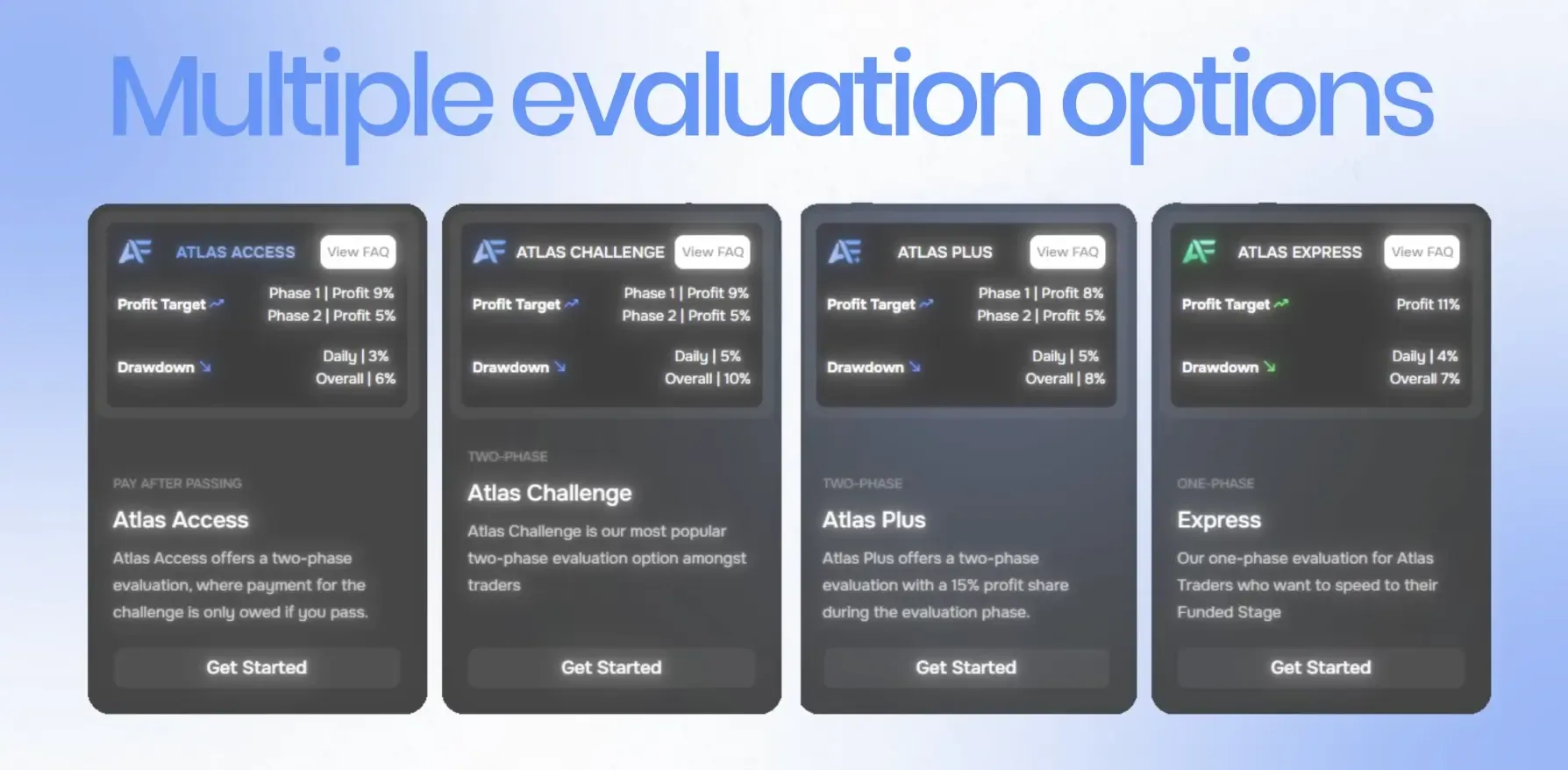
The evaluation structure itself doubles as a learning framework. Profit targets, daily loss limits, and drawdown rules create the same conditions that separate a real trading process from casual speculation. Getting through one demonstrates consistency to the person who matters most in this context: the trader themselves.
Common Mistakes That Slow Progress
The same errors show up repeatedly across beginner learning curves, and most of them have nothing to do with strategy selection.
- Overloading on education without trading: Watching hours of content and reading every available book produces knowledge without skill. Day trading is a performance activity, and the learning eventually has to happen through doing. Prolonged preparation past a certain point tends to reflect avoidance more than readiness.
- Changing the approach after every loss: A losing trade doesn't mean the setup is broken, and a few bad sessions don't justify scrapping a strategy. Switching approaches too early prevents beginners from accumulating the sample size needed to evaluate whether something actually works.
- Treating the demo account as optional: Execution discipline, emotional control, and plan-following habits are built during the paper trading phase. Skipping it means those patterns form under real financial pressure instead, which is a harder environment to build them in.
- Underestimating the cost of bad timing: Low-volume sessions and wide-spread instruments create conditions where sound decisions don't get rewarded. For US equity traders, the first 90 minutes after the open and the final hour before close produce the most consistent intraday opportunity for most strategies.
Final Verdict: Learning Is the Edge
The barrier to starting has never been lower. The $25,000 threshold is gone, commission-free platforms are standard, and paper trading tools are better than they've ever been. What hasn't changed is the time and discipline required to build a genuine edge.
Start with market mechanics, pick one market, practice on a simulator long enough to build real habits, and track everything from the beginning. Once the consistency shows up in your journal, the capital question has multiple answers. A personal account, now unrestricted by the old PDT rules, is one option. A funded account through Atlas Funded, with access to up to $400K in simulated capital and a payout structure that rewards genuine performance, is another. Get funded and start trading real size today.
Ready to take the next step? Explore AtlasFunded's prop trading programs today and put your trading skills to work with the capital to match.
Explore funding programs
 Senior Writer at Atlas Funded



 Your move
 Only pay the full fee after you pass
 UK
UK ES
ES DE
DE FR
FR IN
IN IT
IT