.png)






.svg.webp)
.svg)

Prop Trading vs Hedge Fund: What Is the Difference?

.svg)
Make money trading our capital

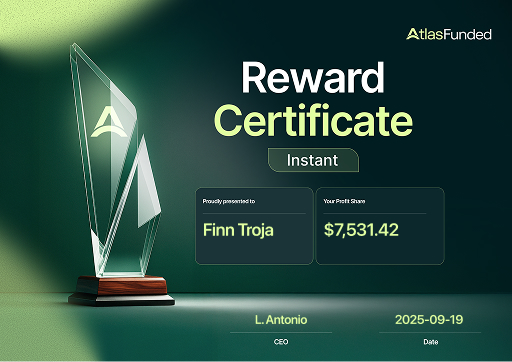

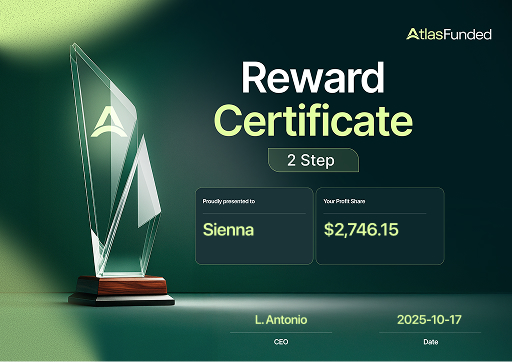

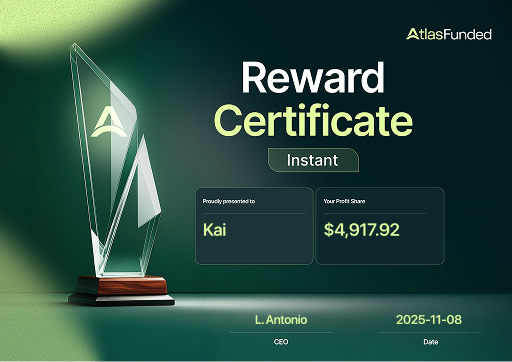
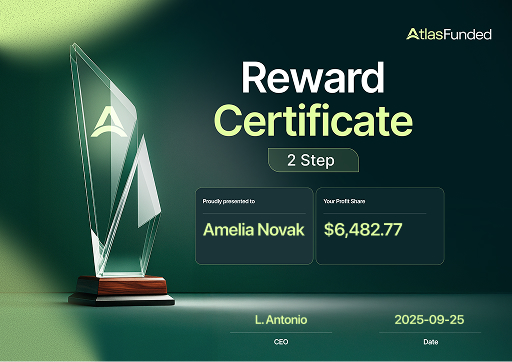
Prop trading and hedge funds get lumped together constantly. Both involve trading financial markets with large amounts of capital. Both can pay extremely well. And both attract people who think they are better at reading charts than everyone else in the room.
But the similarities mostly end there. A prop trader passes a challenge and trades the firm's money from a laptop. A hedge fund manager raises millions from wealthy investors, manages a team, reports to regulators, and answers phone calls from clients who want to know why their portfolio dropped 3% on a Tuesday.
The capital is different. The access is different. The risk, the pay structure, the lifestyle, and the level of independence are all different. Choosing the wrong one is not just inconvenient. It is a waste of years spent building in the wrong direction.
This article breaks down prop trading vs hedge fund across every dimension so you can figure out which one fits how you want to trade.
What Is Prop Trading?
Prop trading, short for proprietary trading, is where a firm gives you its own capital to trade and you split the profits. The modern version works almost entirely online. You pay a challenge fee, trade a simulated account under a set of rules, and if you hit the profit target without breaching the drawdown limits, the firm funds you.
You trade independently, usually from home, using your own strategy on whatever instruments the firm supports. For example, forex, indices, commodities, and crypto.
The profit split typically ranges from 70 to 100%, and it is purely performance-based. If you do not trade, you do not earn. If you trade well, there is no ceiling.
Capital access starts at $5K and can scale to $2M or more at firms like Atlas Funded, which lets you start for as little as $1 to $5 through its pay after you pass model. The firm manages risk through drawdown limits, daily loss caps, and the evaluation itself, which filters out roughly 90% of applicants before they ever touch a funded account.
What Is a Hedge Fund?
A hedge fund is a private investment vehicle that pools capital from wealthy individuals and institutions, then invests that money across financial markets to generate returns. You can take pension funds, endowments, family offices, and people who casually refer to seven figures as "a starting point" as an example.
The fund is run by a manager or team of managers who make the investment decisions. Its strategies range from long/short equity and global macro to quantitative models and event-driven plays.
Some hedge funds hold positions for months, while others trade multiple times a day. The common thread is that they are managing other people's money and are accountable for the results.
The classic compensation model is "2 and 20." A 2% annual management fee on total assets under management plus 20% of profits. So a $1 billion fund that returns 15% in a year generates $20 million in management fees and $30 million in performance fees. Though in practice, many funds have renegotiated these terms downward in recent years to stay competitive.
Access is restricted on both sides. To invest, you typically need accredited status, which in the US means a net worth above $1 million or annual income above $200,000.
To work at one, you usually need a finance degree, a CFA, industry experience, or some combination of all three. This is not a world you walk into with a $100 fee and a demo account.
Hedge funds are also regulated. In the US, funds managing over $150 million must register with the SEC. They are subject to audits, reporting requirements, and investor disclosures. The biggest names in the space, such as Bridgewater, Citadel, and Renaissance Technologies, manage hundreds of billions under these rules.
Prop Trading vs Hedge Fund: Which One Is Better for You?
When comparing prop trading vs hedge fund, neither model is objectively better. They are built for different people with different goals, resources, and tolerance for structure. Here is how to figure out which one fits.
Choose Prop Trading If...
You have a strategy that works, but not enough capital to trade it at a meaningful size. You want to start trading funded capital within days or weeks, not months or years.
You prefer working alone, setting your own hours, and answering to nobody except the drawdown limit. You do not have a finance degree and do not want one. And you would rather cap your risk at a small challenge fee than commit six figures of personal savings.
Prop trading rewards individual performance with no gatekeeping. If you can pass the evaluation, you are in. That is it. If the entry cost is a concern, search for the cheapest prop firms, and you will find plenty of options.
Choose a Hedge Fund If...
You have professional finance credentials and want a structured career with a clear progression. You prefer a base salary that shows up every month, regardless of whether your last trade worked.
You want to manage large-scale capital, potentially hundreds of millions, and build a long-term investment track record that opens doors to running your own fund one day.
You are also comfortable with everything that comes with managing other people's money. You have to deal with:
- Investor relations
- Compliance reporting
- Quarterly reviews
- Team dynamics
- Regulatory audits
The pay can be life-changing at the senior level, but the path there is neither fast nor simple.
Which Path Fits You?
Can You Do Both?
Yes. And more traders are doing exactly that.
Prop trading is increasingly being used as a proving ground. You build a track record of funded performance, verified payouts, and consistent risk management.
That track record becomes evidence of competence that you can take to hedge fund interviews, investor pitches, or applications for institutional trading roles.
A year of documented prop trading results showing steady returns and controlled drawdowns says more about your ability than a resume line about a finance course you took in college.
The skills transfer directly. Managing drawdown, sizing positions properly, staying disciplined through losing streaks, performing under pressure.
These are the same things hedge funds evaluate during their hiring process. The difference is that a prop firm lets you develop and prove them without needing to get hired first.
You are essentially building a live portfolio of your decision-making under real market conditions, which is exactly what any serious institution wants to see before trusting you with their capital.
There is also a practical financial angle. Prop trading can fund your transition. If you are earning consistent payouts from a funded account, that income supports you while you prepare for hedge fund interviews, complete certifications, or build the connections you need to raise investor capital for your own fund down the line.
It is hard to network your way into finance when you are worried about rent. Prop trading income removes that pressure.
Some traders build their entire career around prop trading and never look at hedge funds. The independence, the profit splits, and the ability to scale to $2M or more in funded capital is enough. They do not want a boss.
They do not want investor calls. They do not want to explain their strategy to a compliance department. And for those traders, there is nothing wrong with that. Prop trading is not a stepping stone unless you want it to be.
Others treat it as a launchpad and use the credibility, skills, and capital they built through funded accounts to move into institutional roles or start their own funds. Either path works.
The point is that starting with a prop firm challenge does not lock you into one direction. It gives you options that trading a $500 personal account simply cannot.
Prop Trading vs Hedge Fund: Common Myths Busted
Most of these myths exist because the prop trading industry grew faster than its reputation could keep up. Between 2020 and 2024, the number of prop firms exploded alongside a wave of social media marketing that made getting funded look like a guaranteed shortcut to wealth.
When 80+ firms shut down in 2024 and 2025, taking trader funds and unpaid withdrawals with them, it confirmed every suspicion skeptics already had.
Meanwhile, hedge funds have decades of institutional credibility behind them, even though their track record includes spectacular blowups, investor lawsuits, and funds that quietly closed after years of underperformance.
Neither industry is clean. The difference is that hedge funds have regulation and history insulating their reputation, while prop trading is still earning its credibility one payout at a time.
The firms that survived the shakeout are the ones building that credibility now, and the traders who do their research before paying for a challenge are the ones who benefit.
FAQs
Conclusion
Prop trading vs hedge funds both offer ways to trade financial markets with serious capital. But they are built for different people at different stages.
Prop trading is faster to access, financially safer as a starting point, and completely independent. You do not need credentials, investor relationships, or years of career building. You need a strategy that works and the discipline to execute it under rules. If you can do that, the path from a $5 challenge fee to a six-figure funded account is real and documented.
Hedge funds offer structured careers, steady salaries, and the potential to manage enormous pools of capital. But the path requires credentials, experience, and years of trust-building with investors and institutions.
For most traders reading this, prop trading is the practical starting point. You can always build toward a hedge fund career later. But you cannot build toward anything if you never start trading with real capital.
.webp)
.webp)
.png)



.avif)
.avif)
.avif)
.avif)